
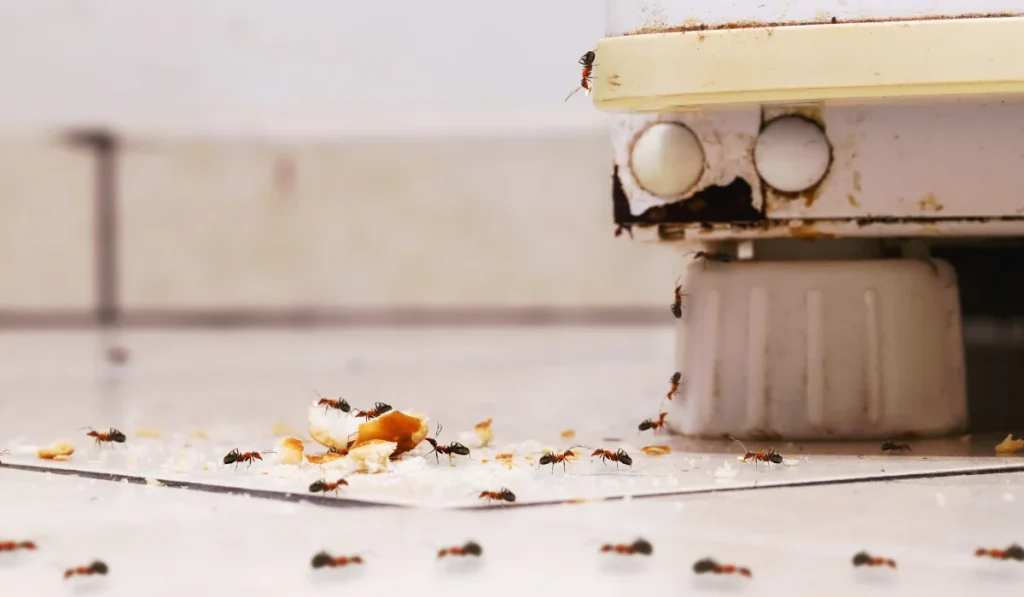
If you see a line of tiny ants on countertops or along baseboards, you June have grease ants. They often show up around sinks, pantries, and food prep areas.
Many homeowners in Springfield, Missouri, first notice a trail of ants around crumbs, cooking residue, or food left out overnight.
Grease ants quickly find food sources, and once they settle in, their ant colonies grow and spread to nearby areas.
With proper identification, good cleaning habits, and professional ant control, you can reduce activity and keep your kitchen from becoming a steady food source.
Key Takeaways
- Grease ants are tiny ants that search kitchens for greasy foods, dairy products, and other food scraps.
- They travel along ant trails across countertops, baseboards, and inside cabinets.
- Grease ant infestations usually begin when ants find a steady food source inside a home or commercial kitchen.
- Prevention includes sealing entry points, storing food in airtight containers, and keeping the kitchen clean.
What “Grease Ants” Are in Kitchens
Grease ants are one of the most common ants found in kitchens. To understand how to stop them, it helps to know what they are and how they behave.
Thief Ants
In most kitchens, grease ants are thief ants. They range from light to dark brown and often go unnoticed until the infestation grows.
Thief ants get their name because they steal food and larvae from nearby ant colonies. They are attracted to greasy foods, oils, meats, and dairy products, which makes kitchens a common feeding area.
Because of their small size, they build nests in hidden areas like wall voids, behind cabinets, or under appliances. From these hidden spaces, worker ants enter kitchens to find food.
Why They’re Called Grease Ants
The name “grease ants” comes from their preference for fatty or oily foods. Instead of sugary foods, they target cooking oil, meat scraps, and residue on countertops.
They also feed on dead insects indoors. When food residue builds up in pantries, trash areas, and along baseboards, it can spread bacteria and other pathogens if you do not clean surfaces often.
They move through small crevices and gaps around cabinets, which makes them hard to detect early.
How to Tell Grease Ants From Other Ants
Not all tiny ants in your kitchen are the same. Knowing the differences helps you choose the right pest control approach.
Differences Between Grease Ants and Pharaoh Ants
Many people confuse grease ants with pharaoh ants. While both are small and light-colored, pharaoh ants are typically more yellowish and have a segmented club at the end of their antennae.
Grease ants have a smoother body shape, a defined thorax, and tend to appear slightly darker. Correctly identifying the ant species matters because different types of ants respond to different treatments.
Differences Between Grease Ants and Sugar Ants
Another common comparison is with sugar ants. Unlike grease ants, sugar ants prefer sweet foods such as syrups and fruit.
Grease ants generally prefer fats and proteins, though feeding behavior can vary. Watching whether ants prefer peanut butter or greasy residue can help you identify the type of ant.
How Grease Ants Get Into Kitchens
Grease ants do not appear by chance. They follow clear paths into your home as they search for food and shelter.
Small Entry Points Around the Structure
Grease ants can enter homes through very small entry points. Gaps around doors, windows, plumbing lines, and utility penetrations are common access areas.
Once inside, worker ants form ant trails between the nest and a food source. These trails help the colony move between hidden nests and the kitchen.
Nesting in Hidden Indoor Spaces
In many cases, the ants’ nest is not located directly in the kitchen. Colonies hide in wall voids, behind cabinets, or in areas with rotting wood. Because these nests remain hidden, DIY treatments often affect only the visible ants, not the entire colony.
From there, ants travel through hidden pathways until they reach a food source on a countertop or in a cabinet.
Food Sources That Attract Grease Ants
Kitchens give grease ants easy access to food. Even small amounts of grease or crumbs can keep ants active.
Common attractants include cooking oils, meat scraps, dairy products, pet food, and items stored loosely in pantries. Poor storage, especially outside airtight containers, makes it easy for ants to return.
How to Prevent Grease Ants in Kitchens
Preventing grease ants starts with removing attractants and blocking their entry. Small changes can make a big difference.
Remove Food Sources
One of the best ways to prevent grease ant infestations is to limit access to food.
Wipe down countertops, clean around appliances, and empty trash regularly. Areas behind stoves and refrigerators collect grease and crumbs, making them common problem spots.
Storing food in airtight containers helps reduce access to these attractants.
Seal Entry Points
Sealing entry points helps stop ants from entering the home.
Check for gaps around baseboards, cabinets, windows, and plumbing lines. Closing these crevices limits access and helps disrupt ant trails before they become established.
Regular maintenance around windows, doors, and utility lines helps keep ants out.
Use Ant Baits Instead of Sprays
Many DIY methods rely on sprays that only affect visible ants. Killing only the visible ants can break up ant colonies and cause them to spread. Ant baits allow worker ants to carry the bait back to the colony and reach hidden nests.
As part of pest management, this method gives more steady, long-term control.
Schedule a Kitchen Ant Inspection and Prevention Plan
Recurring grease ant infestations are frustrating for homeowners. Because colonies often hide in hard-to-reach areas, a professional inspection is the most reliable way to find the source.
At Holper’s Pest & Animal Solutions, technicians identify the ant species, locate nesting areas, and recommend practical steps to reduce activity over time. This approach focuses on solving the problem without extra services you do not need.
If you see signs of grease ants, scheduling an inspection can help you get rid of grease ants and stop the problem from spreading.
Contact us to schedule a kitchen ant inspection and prevention plan for Springfield homes. Our team can find the source, recommend solutions, and help reduce ant activity in your kitchen over time.
FAQs
What are grease ants in kitchens?
Grease ants are small ants that prefer fatty foods like oils, meats, and dairy products. They often appear in kitchens where they find food scraps on countertops, inside cabinets, or in pantries.
Why do grease ants keep coming back?
Grease ants return when they find a steady food source. Even small crumbs or grease residue can repeatedly attract them. If the nest stays hidden in wall voids or nearby areas, ants will keep sending workers into the kitchen.
Can DIY treatments get rid of grease ants?
Some DIY methods June temporarily reduce the number of visible ants, but they often fail to eliminate the entire colony. Because grease ants nest in hidden spaces, professional residential pest control and targeted ant baits are often needed to fully eliminate the infestation.