Skip to content
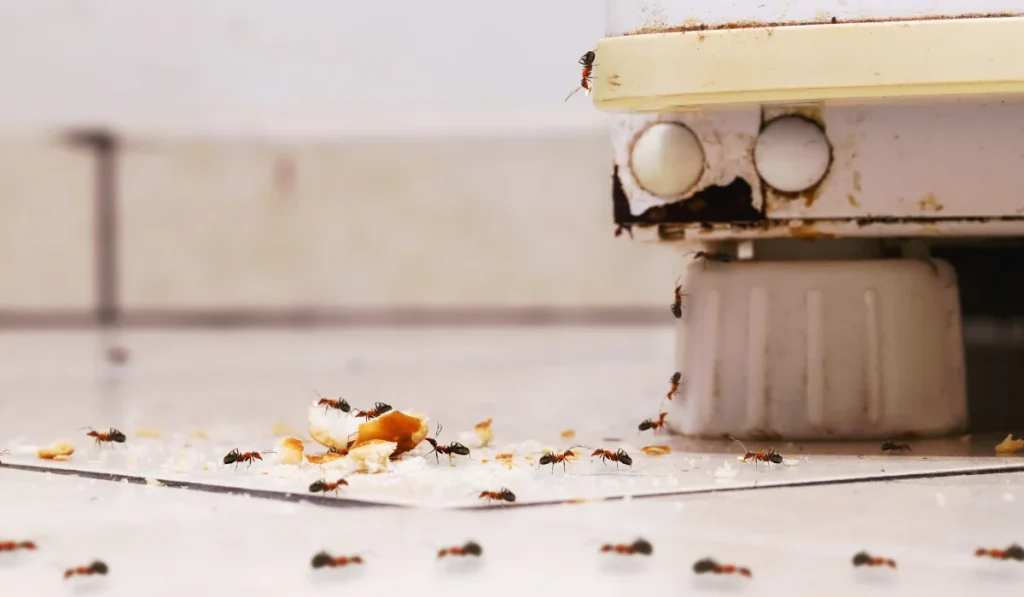
Ants inside your home often mean more than a few worker ants near your sink. In Franklin County, MO, ants move indoors when they find water, crumbs, pet food, or nesting sites in walls and under floorboards.
When ants find food and water indoors, it can turn a small ant problem into steady activity in the kitchen, basement, or living room. Some house ants are a nuisance, but carpenter ants are a bigger concern because they nest in damp wood or wall voids.
You can often spot clues before the ant infestation grows. Once you know where to look, it is easier to track the nest and decide if DIY steps or professional ant control is the better option.
Key Takeaways
- Indoor ants often leave signs before you find the nest.
- Watch for ant trails, sawdust piles, activity near baseboards, and movement in wall voids.
- In Franklin County, carpenter ants, odorous house ants, pavement ants, and pharaoh ants may all show up indoors.
- Early action can reduce ant activity before the entire colony spreads.
Signs an Ant Nest May Be Indoors
Start with these clues ants leave.
Steady Ant Trails
Ants follow pheromone trails from a food source back to the nest. These pheromone trails guide other worker ants along the same path.
Small Piles Near Wood or Trim
Carpenter ants leave small piles that look like sawdust. You may see this near window trim, floorboards, or a carpenter ant’s nest in rotten wood. Unlike termites, carpenter ants do not eat wood, but they can still cause structural damage over time.
Ants Showing Up in the Same Room
If you keep seeing house ants in the same room, it often points to nearby nesting sites. Repeated sightings or dead ants near windows can signal an indoor ant colony.
Where to Look for Indoor Ant Nests
Check these areas ants prefer.
Behind Baseboards and Inside Wall Voids
Many ant species hide in wall voids and small gaps near entry points. Check where plumbing enters walls and where baseboards or trim have pulled away. A carpenter ant’s nest can stay hidden in these areas for long periods.
Under Sinks, Near Moisture, and in Basements
Basements, laundry rooms, and sink cabinets are common nesting sites. Damp wood can attract carpenter ants, while other types of ants settle near leaks or damp storage areas.
Around Windows, Doors, and Floor Edges
Entry points around windows and doors allow ants to enter from outdoor nests. Pavement ants, fire ants, and odorous house ants may enter through cracks, then settle near floorboards or along edges.
How to Track Ants Back to the Nest
Follow these simple steps to track ants.
Watch the Worker Ants
Worker ants can lead you back to the nest if you watch them over time. Avoid spraying if you are trying to trace their path, and follow their movement from the food source toward walls or hidden gaps.
Use Sweet or Greasy Food
Different types of ants prefer different food sources. A small dab of honey or peanut butter can reveal ant trails and show where activity is strongest. This method can help you decide whether ant baits are more effective than store-bought ant killers.
Check Day and Night
Some ant species are more active after dark. Check the same area at different times. Light rustling in a wall near a carpenter ant’s nest can mean the colony is inside.
What to Do After You Find It
Finding the nest is only the first step.
Avoid Scattering the Colony
A rushed DIY treatment can split the ant colony, making the ant infestation harder to control. Splitting the colony is common with pharaoh ants. Instead of trying multiple DIY treatments, focus on locating and fixing the source.
Fix Moisture and Food Issues
Clean crumbs, store pet food tightly, and fix leaks promptly. Reducing food and moisture helps get rid of ants and makes the space less attractive for nesting.
Bring in Professional Help When Needed
Professional ant control is often a good option for carpenter ants, especially when carpenter ants hide their nest. Professional pest control targets the cause of the ant problem, not just visible activity.
Schedule Ant Control in Franklin County
Indoor ants rarely stay in one place for long. If you keep finding ant trails, hidden entry points, or signs of a carpenter ant nest, it is time to act before the entire colony spreads.
Holper’s Pest & Animal Solutions provides paid inspections and recurring pest control for homes and businesses in Franklin County, with practical ant control based on what your technician finds.
Contact us to handle current ant problems and reduce the chance of ants returning.
FAQs
Can ants nest inside walls?
Yes. Ants often nest in wall voids, behind baseboards, and near damp wood. Carpenter ants are a concern because they spread through hidden spaces and keep returning until you remove the nest.
How do I know if I have carpenter ants or termites?
Carpenter ants are larger and may leave sawdust-like debris near a carpenter ant nest. Termites tend to stay hidden and damage wood in different ways. Both need quick attention because they can point to a larger home issue.
When should I call an exterminator for ants?
Call an exterminator when ants keep coming back, when you suspect a carpenter ant nest, or when DIY ant baits do not slow the ant activity. Repeated indoor activity usually means you did not fully address the nest or entry points.