Skip to content
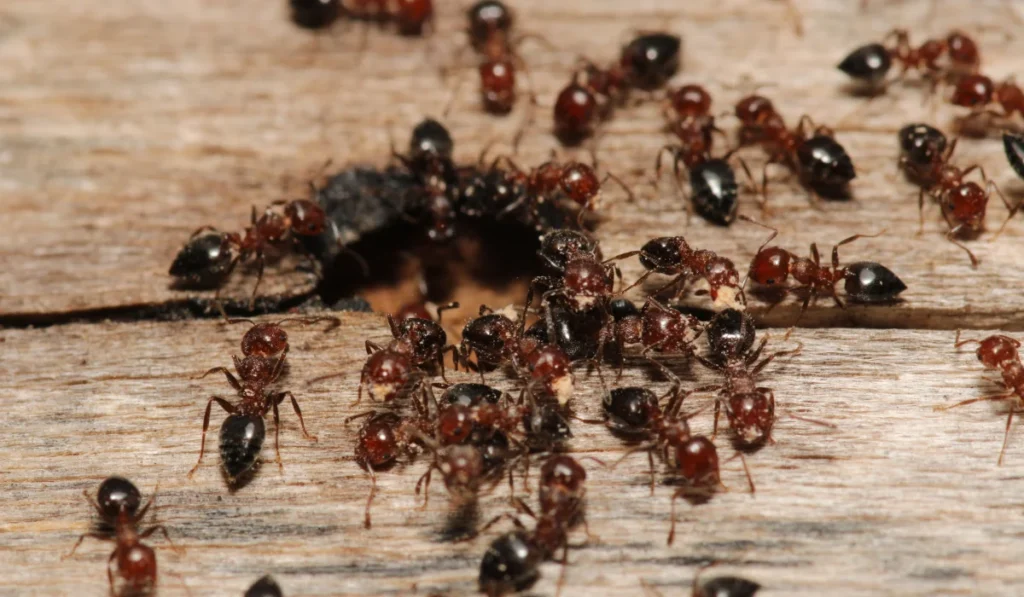
You notice a few large black ants crawling along a basement wall after a spring rain. A week later, you find what looks like a small pile of sawdust-like material beneath a window frame or near a wooden support beam.
Those signs often point to carpenter ants, a wood-damaging pest that can establish nesting sites inside homes throughout the St. Louis area. Effective carpenter ant pest control starts with identifying where the ants are nesting and understanding what is attracting them to your property.
In this guide, you’ll learn how to recognize carpenter ant activity, what causes infestations, the risks these ants can create for your home, and what professional treatment typically involves. Whether you’ve spotted a few ants or are concerned about a larger colony, knowing what to look for can help you address the problem before it becomes more difficult to control.
Key Takeaways
- Carpenter ants hollow out wood to build nests rather than eating it, so the signs of activity and the approach to control differ from other wood-damaging pests.
- Addressing moisture problems and sealing entry points around your home are practical first steps that support any carpenter ant control effort.
- Locating the nest is a critical part of the process, and professional treatment typically involves targeted applications rather than surface sprays alone.
- Holper’s carpenter ant service includes two treatments spaced 30 days apart, with an emphasis on finding the nest to address the colony at its source.
How to Identify Carpenter Ants
Knowing what carpenter ant activity looks like is the first step toward addressing it. These ants can be difficult to pin down because their nests are often hidden and not easily discovered. Understanding the signs they leave behind helps you decide when it is time to bring in a professional for a closer look.
What Do Carpenter Ants Look Like?
Carpenter ants are among the largest ants homeowners encounter in Missouri. Most are black, though some may appear dark reddish-black, and workers can range from about 1/4 inch to 1/2 inch long. Unlike termites, carpenter ants have a narrow waist, bent antennae, and segmented bodies. Seeing a few large ants indoors, especially near moisture-damaged wood, can be an early sign that a colony is active nearby.
How to Recognize Carpenter Ant Activity
Carpenter ants damage wood by excavating galleries and tunnels for their nest. Unlike termites, they do not consume the wood itself. The galleries they create are clean, free of debris, and smooth with a well-sanded appearance.
Carpenter ants prefer wood that has been softened by moisture or early stages of decay, which is why they are often associated with water-damaged areas around a structure. Recognizing this preference helps you narrow down where to look.
How to Spot Carpenter Ant Activity Inside Your Home
Small piles of coarse, sawdust-like material beneath window frames, baseboards, door frames, or exposed wood can indicate carpenter ant activity inside the structure. These small mounds of wood shavings often appear below areas where ants have been excavating their nest.
Locating the nest is often challenging. As the University of Minnesota Extension notes, careful observations of worker ants can help you find the nest. Watching worker ant movement between sunset and midnight during the spring and summer months may reveal their travel path back to the colony.
Where Carpenter Ant Activity Shows Up Around Homes
Carpenter ants are wood-destroying insects usually found around the base of large trees, decks, fences, and mulch beds. Because they prefer moist, softened wood, areas with water exposure or early decay tend to draw their attention.
Worker ants travel between the nest and food sources in patterns you can track. Observing these trails, especially during evening hours, can point you toward the nest location before damage spreads further into structural wood.
Exterior Entry Points Carpenter Ants Use
Carpenter ants that nest outdoors may move into a home while foraging. This movement between outdoor nests and indoor spaces is one reason you may spot ants inside even when the main nest is outside.
Checking areas where wood contacts soil, where moisture collects, or where weathered wood has begun to soften can help you identify likely entry paths. These are the zones carpenter ants favor when establishing nests close to or within a structure.
Why Carpenter Ant Problems Develop
Carpenter ant problems rarely appear overnight. These ants build nesting networks that connect outdoor colonies to indoor spaces, and understanding what draws them in helps you stay ahead of the issue. Most carpenter ant pest control challenges start with conditions around your property that give the colony easy access to food, water, and shelter.
Outdoor Nesting Areas for Carpenter Ants
Outdoor colonies often originate near trees, decks, fences, and mulch beds. Workers excavate smooth galleries inside wood to raise their young. According to the Oregon State University, getting rid of carpenter ants requires good building maintenance, including eliminating water damage and sealing entry points.
Carpenter ants may establish satellite colonies in wall voids, attics, or other protected areas of a structure. As a result, the ants you see indoors may be connected to a larger colony located elsewhere on the property.
Food and Shelter That Attract Carpenter Ants
Carpenter ants are often attracted to moisture and food sources around the home. Pet food, sugary spills, uncovered trash, and standing water can encourage foraging activity indoors.
How Carpenter Ants Move Around Homes
Black carpenter ants range from 1/4 to 5/8 inch and are nocturnal, which means most foraging happens after dark. You may not notice activity during the day even when a colony is well established nearby. Piles of coarse sawdust or splintered wood can indicate a nest, and dead insects falling from a wooden porch may point to a colony above.
Trails and Entry Points Carpenter Ants Use
Entry points such as window sills and doorsteps give foraging ants a direct path from outdoor nests into your home.
According to the University of Tennessee Extension, sealing these entry points is one step in excluding ants that forage indoors from an outdoor nest. When nests are hidden inside wood or wall voids, drilling into those spaces may be necessary, a task that calls for a professional.
Risks From Carpenter Ants
Carpenter ant pest control matters because these pests create problems that go beyond simple annoyance. Understanding the risks they pose helps you decide when to act and what to watch for around your home.
Health Risks Linked to Carpenter Ants
Carpenter ants can bite, but they do not sting. While bites are not typically a serious health concern, they can be unpleasant when these pests are active indoors. Foraging worker ants that enter your home become a nuisance, especially when they appear repeatedly in living spaces.
Property Damage From Carpenter Ants
Unlike termites, carpenter ants do not eat wood. Instead, they hollow it out to create nesting space. This behavior may cause considerable damage over time. Because the damage occurs inside the wood, homeowners often do not notice a problem until they see sawdust-like debris, hear activity inside walls, or uncover damage during repairs.
Because the damage occurs gradually and often remains hidden, homeowners may not discover a problem until activity has been present for some time.
Food Areas and Carpenter Ant Activity
Foraging worker ants leave the nest and seek foods such as insects, decaying fruit, and honeydew. When these workers enter a home, they often move through kitchen areas and anywhere food is accessible. Their presence in food-preparation areas adds to the nuisance factor and can be a recurring frustration when nests remain active nearby.
When to Look Closer at Carpenter Ant Activity
Indoors, carpenter ants may nest in wall voids and rotted wood, especially window frames. If you notice any activity near these areas, it is worth investigating further. Not every ant species that nests indoors causes structural damage to buildings, so proper identification matters before deciding on a treatment approach.
Because these pests hollow out wood for nesting rather than feeding, the signs of their presence can be subtle at first. Paying attention to where you see foraging ants and checking wood that may already be softened or rotted can help you catch activity before it spreads further into the structure.
Professional Pest Control for Carpenter Ants
A professional pest control service is recommended for carpenter ants or any wood-destroying insect, according to Oregon State University Solve Pest Problems.
How to Reduce Attractants for Carpenter Ants
Carpenter ant nests found away from your home can generally be tolerated, but nests near or inside structures need attention.
Reducing conditions that invite an infestation starts with limiting wood-to-soil contact around your home. Keep structural wood separated from soil where possible, and address any cracks or expansion joints in foundations or slabs that could serve as entry points.
Repair damaged wooden structures promptly. Carpenter ants target wood they can hollow out for nesting, so maintaining the integrity of wooden components around your home removes opportunities for them to establish themselves indoors.
Why Carpenter Ant Control Starts With Inspection
Locating the nest is a critical part of carpenter ant pest control. Holper’s Pest & Animal Solutions uses a technician-first model, sending a service professional rather than a salesperson. Our paid inspection approach focuses on identifying nesting locations, contributing conditions, and the most effective treatment strategy for the property.
Because the signs of an infestation can be subtle, a thorough inspection of the structure, both interior and exterior, helps identify where nesting activity is occurring and how ants may be accessing the building.
What to Expect During Professional Carpenter Ant Treatment
Holper’s carpenter ant treatment includes targeted exterior applications designed to address active carpenter ant activity around the structure.
Locating the nest remains an important part of the process because it helps technicians focus treatment where it will be most effective. The service includes two treatments spaced 30 days apart, allowing the technician to reassess activity after the initial application.
Professional treatment targets the infestation at its source rather than addressing only the ants you see moving through your home.
What to Expect From a Carpenter Ant Control Plan
Holper’s follows an Integrated Pest Management process that combines inspection, treatment, and ongoing monitoring. Carpenter ant service starts at $425 for the two-treatment program. Recurring general pest customers may also receive discounts on additional services.
After treatment, repairing any damage to wooden structures helps prevent future nesting opportunities. Addressing both the infestation and the conditions that attracted the colony gives your home a stronger position going forward. If you notice new activity between visits, your technician can adjust the approach at the follow-up service.
Carpenter Ant Pest Control: Bottom Line
Carpenter ant control comes down to finding and addressing the nest, not just the workers you see trailing through your home. These ants hollow out wood for nesting rather than feeding on it, but they can still weaken structural timbers over time.
Reducing moisture issues, replacing damaged wood, and sealing entry points are practical steps any homeowner can take. However, because nests are often hidden and hard to reach, professional help is usually the best path forward.
If carpenter ants are showing up around your St. Louis home, an inspection can help determine where the colony is nesting and what conditions are supporting the activity. Holper’s Pest & Animal Solutions provides carpenter ant inspections and treatment plans designed to address the problem at its source.
Frequently Asked Questions
Why Is Finding the Nest So Important?
Carpenter ants build their nests inside wood, often in concealed spaces like cracks between structural timbers. Treating only the visible foraging workers leaves the rest of the colony intact. Locating and destroying the nest is the most reliable way to address the problem at its source. Careful observation of worker ant trails can help narrow down the nest location.
What Can I Do Around the House to Prevent Problems?
Start by fixing moisture issues. Carpenter ants may prefer moist or decaying wood, so repairing leaks and replacing water-damaged lumber removes conditions that attract them. Seal gaps where ants could enter, and keep an eye on areas near large trees, decks, fences, and mulch beds where colonies sometimes establish outdoors.
How Is Carpenter Ant Damage Different from Termite Damage?
Carpenter ants do not consume wood. Instead, they hollow it out to create smooth nesting galleries. While their damage is usually not as serious as what termites cause, it can still weaken building structures if left unaddressed. Tolerating carpenter ant nests that are well away from structures is generally fine, but nests inside your home call for action.
What Does Professional Treatment Involve?
At Holper’s, the process starts with locating the nest, which is critical to treatment success. A termiticide treatment is applied on the exterior, and the service includes two visits spaced 30 days apart. The focus is on addressing the colony directly rather than relying on surface-level approaches alone.