
You step into the backyard to pull weeds along the fence line and see a snake slip beneath a pile of leaves. Later that week, another one moves across a landscaping bed near the patio.
In Wildwood, where wooded lots, creeks, rock walls, and natural areas are common, snake sightings around yards are not unusual. The important question is whether you are seeing a harmless species or one of the venomous snakes in Missouri.
Most snakes around Wildwood homes are not venomous. Still, any unidentified snake deserves space. This guide explains which venomous snakes live in Missouri, which ones are most relevant to Wildwood homeowners, which harmless snakes are often confused with them, and when professional help makes sense.
Key Takeaways
- Missouri is home to several venomous snake species, and knowing how to tell them apart from non-venomous snakes can help you respond appropriately when you spot one on your property.
- A venomous snake bite can pose a serious health concern, so giving any unidentified snake plenty of space is the safest approach for you and your family.
- Snakes may enter your home seeking warmth, shelter, or food sources such as rodents and insects, making ongoing property management an important part of reducing encounters.
- Professional snake trapping, repellent applications, and exclusion work can help lower snake activity around your home over time, though results depend on environmental conditions and reapplication schedules.
How to Identify Common Snakes in Missouri
Missouri has several venomous snake species, but they are not all equally likely to appear near a Wildwood home. A homeowner guide should focus less on memorizing every species and more on safe response: observe from a distance, avoid handling, and get help when identification is uncertain.
Color alone is not reliable. Many harmless snakes are brown, gray, black, or patterned in ways that resemble venomous species at a glance.
Venomous Snakes in Missouri
Missouri is home to six venomous snake species, according to the Missouri Department of Conservation. These include the Eastern Copperhead, Northern Cottonmouth, Timber Rattlesnake, Western Pygmy Rattlesnake, Eastern Massasauga, and Prairie Massasauga.
While not all of these species occur throughout the state, understanding their identifying characteristics can help homeowners distinguish them from the many nonvenomous snakes found in Missouri.
Eastern Copperhead

The Eastern Copperhead is Missouri’s most widespread venomous snake and is often the species homeowners are most likely to encounter. It is typically tan, gray, or light brown with darker hourglass-shaped crossbands across the body. Copperheads are active throughout much of the state.
Because their coloration blends into leaves and natural ground cover, copperheads can be difficult to spot around wooded property edges, landscaping beds, and brushy areas.
Northern Cottonmouth
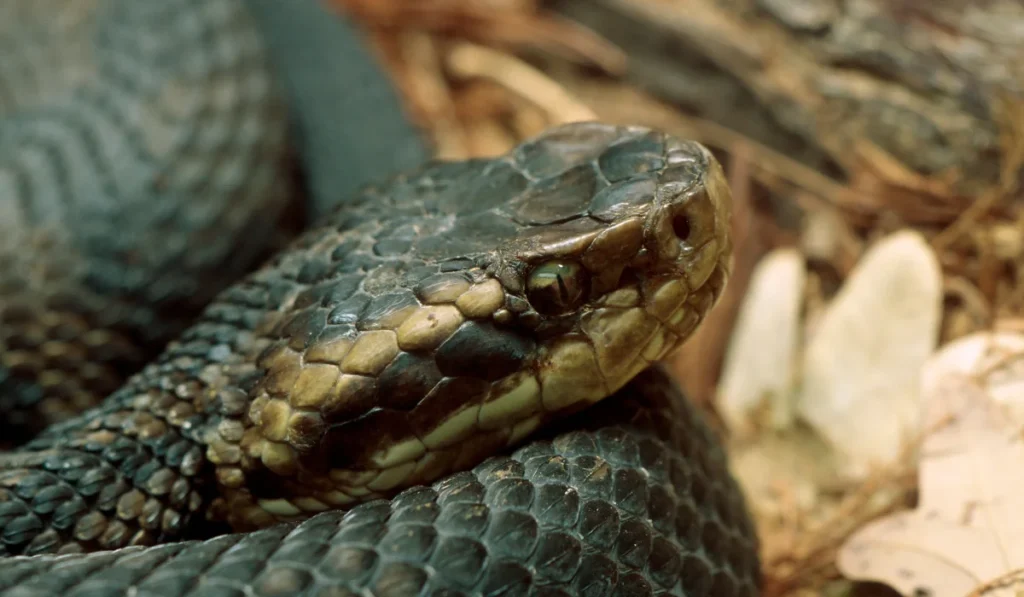
Northern Cottonmouths are heavy-bodied snakes associated with swamps, sloughs, streams, and other aquatic habitats. They are found primarily in southeastern Missouri and portions of the Ozarks.
Many harmless watersnakes are mistakenly identified as cottonmouths, which is why homeowners should avoid relying on color alone when identifying a snake.
Timber Rattlesnake
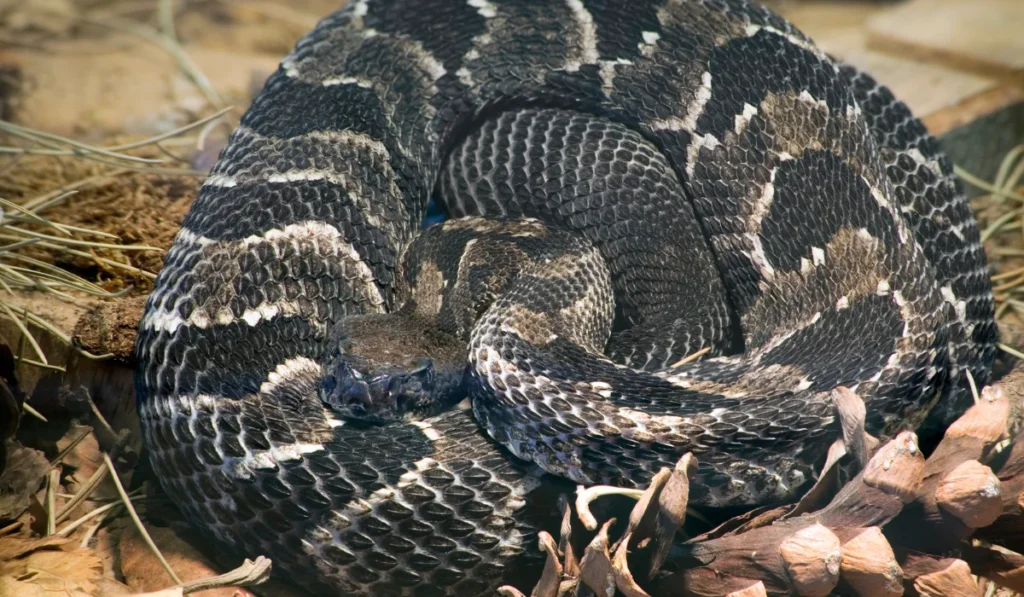
The Timber Rattlesnake is Missouri’s largest venomous snake. It is recognized by the rattle at the end of the tail and dark crossbands along the body. Timber rattlesnakes are found throughout much of Missouri in forested and rocky habitats.
Although encounters around homes are less common than copperhead sightings, properties bordering extensive wooded areas may occasionally experience snake activity.
Western Pygmy Rattlesnake
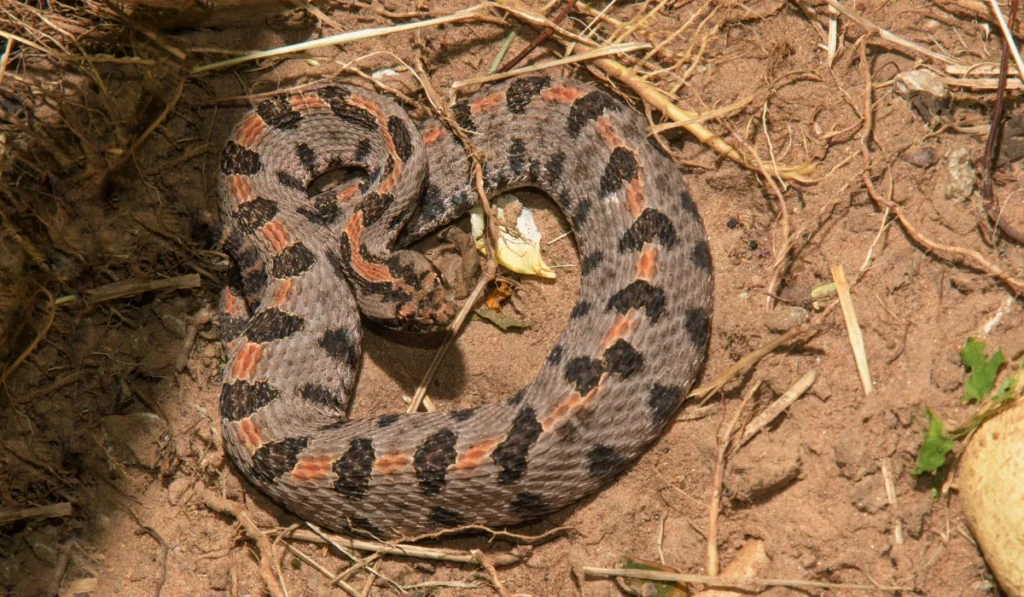
The Western Pygmy Rattlesnake is Missouri’s smallest rattlesnake species. It is typically gray to light brown with darker blotches along the back and a small rattle at the end of the tail. This species is found primarily in the southern portions of the state.
Because of its smaller size, homeowners may overlook this species when moving debris, firewood, or other materials stored outdoors.
Eastern Massasauga
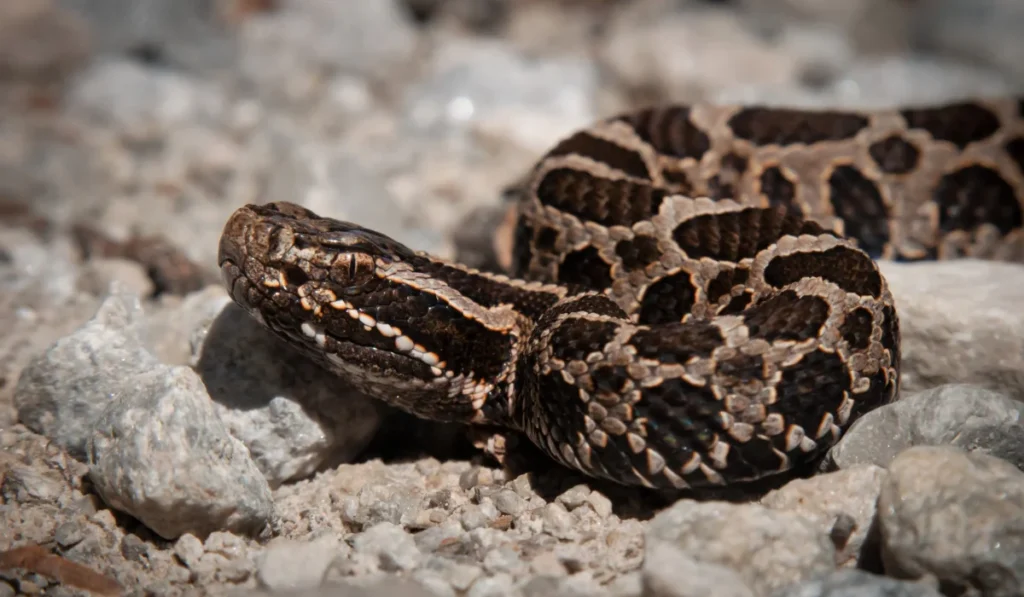
The Eastern Massasauga is a venomous rattlesnake with a pattern of dark blotches running down the body. It’s a state-endangered species with a limited distribution. Most homeowners are unlikely to encounter an Eastern Massasauga around their property.
Prairie Massasauga
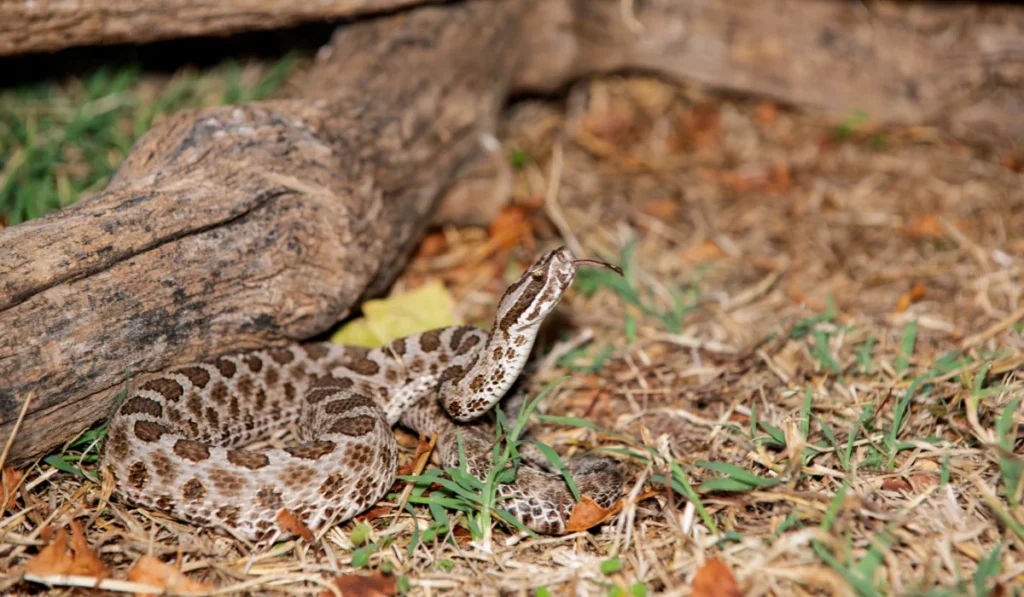
The Prairie Massasauga is another venomous rattlesnake found in Missouri. Like the Eastern Massasauga, it has a limited range and is encountered far less often than copperheads or timber rattlesnakes.
Which Venomous Snakes Are Most Relevant to Wildwood Homeowners?
While Missouri has six venomous snake species, not all occur near Wildwood. For homeowners in the St. Louis area, copperheads are generally the venomous snake people are most likely to recognize and ask about. Timber rattlesnakes may also show up in suitable wooded habitats, while the state’s other venomous snakes are associated with more limited ranges or specialized habitats.
Common Nonvenomous Snakes Around Wildwood Homes
Most snakes encountered around Wildwood homes are not venomous. Missouri is home to dozens of snake species, and many help control rodents, insects, and other small animals around the property. Learning to recognize some of the state’s more commonly encountered nonvenomous snakes can make it easier to determine when a sighting is routine and when additional caution may be warranted.
Western Ratsnake
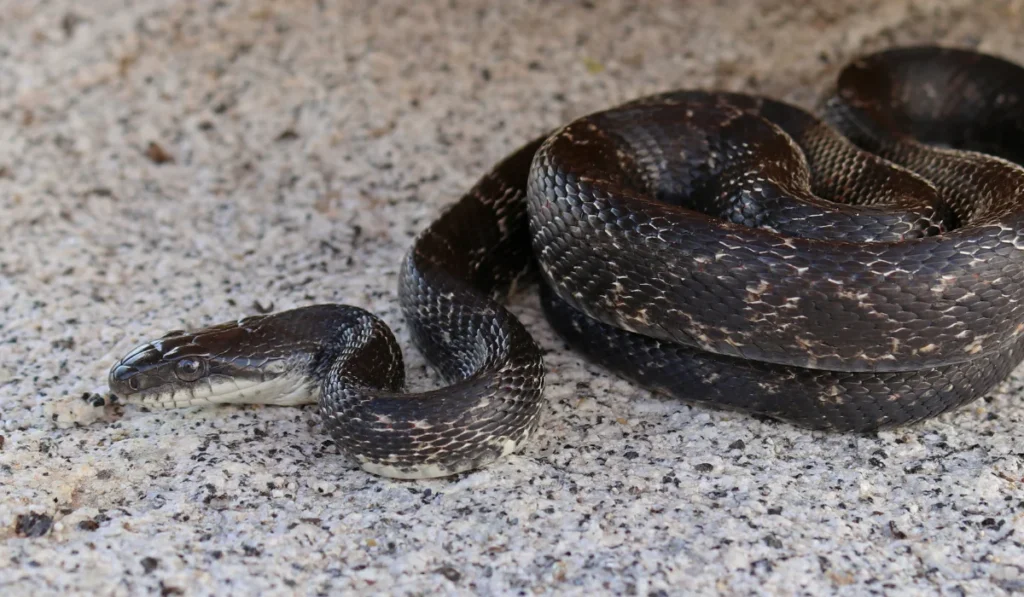
The Western Ratsnake is one of the largest and most recognizable snakes homeowners may encounter in Missouri. Adults are generally black with a lighter underside and are often found around barns, sheds, woodpiles, garages, and wooded property edges.
Although their size can surprise homeowners, Western Ratsnakes are nonvenomous and are known for helping control rodent populations around homes and outbuildings.
Eastern Gartersnake
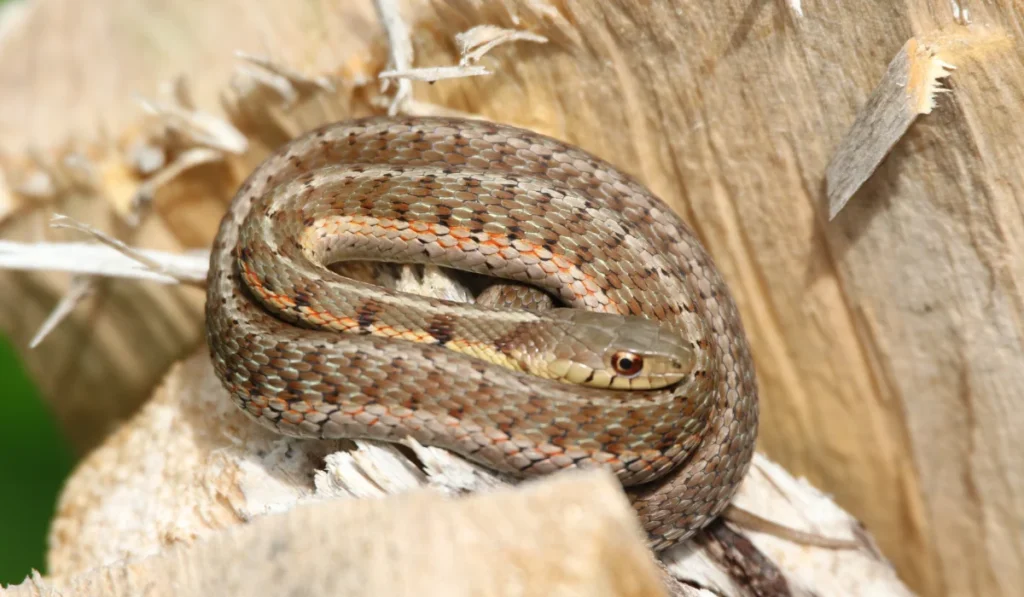
Eastern Gartersnakes are among the most common snakes found in residential landscapes. They are typically slender and marked with three light-colored stripes running the length of the body. Homeowners often encounter gartersnakes in gardens, landscaping beds, lawns, and areas with moisture or dense ground cover.
Northern Watersnake

Northern Watersnakes are commonly associated with creeks, ponds, lakes, and other water sources. Their coloration can vary considerably, which contributes to frequent misidentification.
Because they are often found near water and may appear defensive when approached, Northern Watersnakes are frequently mistaken for venomous cottonmouths even though they are nonvenomous.
Eastern Milksnake
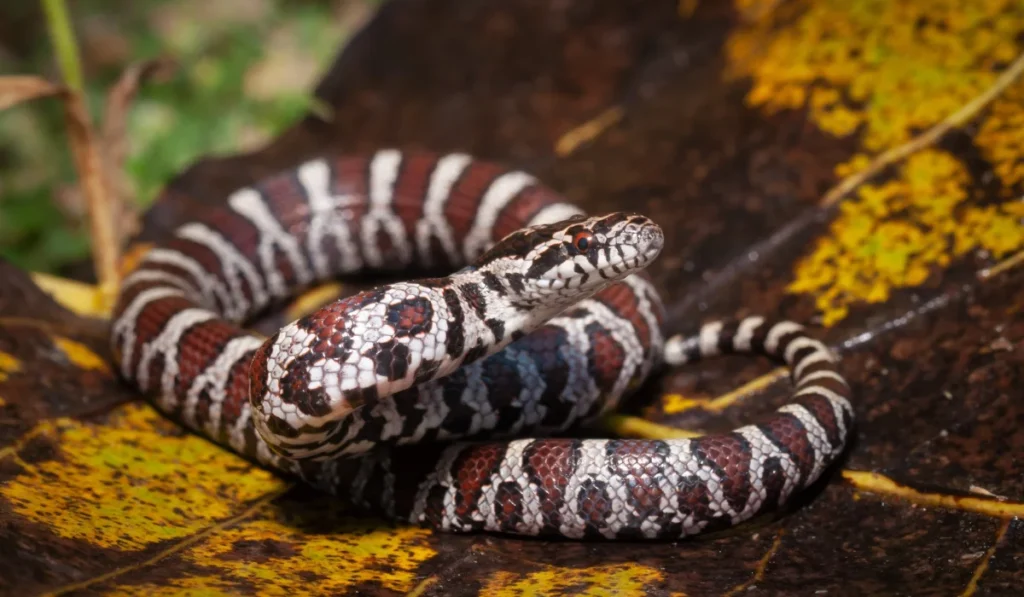
Eastern Milksnakes are identified by their light gray or tan background color and reddish-brown blotches outlined in darker borders. Their distinctive pattern can cause homeowners to mistake them for venomous species, but Eastern Milksnakes are harmless and commonly feed on rodents and other small prey.
Eastern Hog-nosed Snake
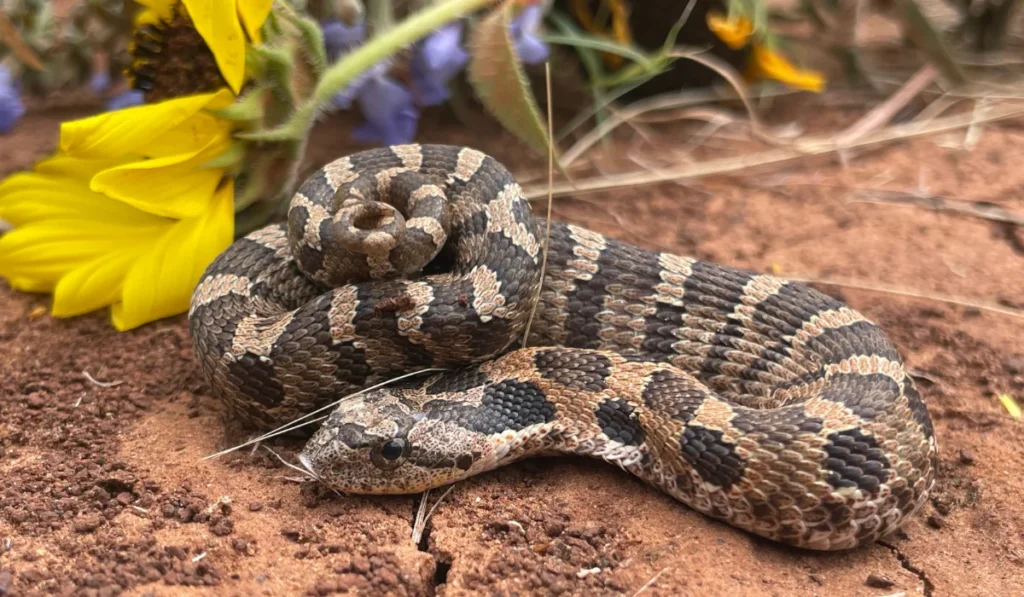
The Eastern Hog-nosed Snake is known for its distinctive upturned snout and dramatic defensive behavior. When threatened, it may flatten its neck, hiss loudly, or even roll onto its back and play dead. Despite its intimidating display, the Eastern Hog-nosed Snake is nonvenomous and rarely poses a concern for homeowners.
Why Harmless Snakes Are Often Misidentified
Many homeowners identify snakes based on a quick glimpse rather than a prolonged observation. Color alone can be misleading because several Missouri snake species share similar shades of brown, gray, black, or tan.
Looking at the overall body pattern, habitat, and behavior usually provides a more accurate identification than focusing on a single characteristic. If you’re unsure what species you’ve encountered, observe it from a safe distance and avoid attempting to handle it.
Why Snake Problems Develop in Wildwood Homes
Snake activity around homes is often linked to available shelter, food sources, and nearby natural habitat. Understanding these factors can help homeowners reduce conditions that attract snakes to the property.
Outdoor Nesting Areas for Snakes
Rock piles, woodpiles, brush, sheds, and cluttered storage areas can provide cover for snakes. These locations offer protection from predators and easy access to prey. Outbuildings with undisturbed clutter offer quiet harborage where snakes can settle without being detected for weeks.
Food and Shelter That Attract Snakes
Snakes generally seek sheltered areas that provide protection and access to food. Around homes, those areas can include crawl spaces, garages, woodpiles, rock walls, and dense vegetation.
A supply of insects and rodents is the most common reason snakes travel toward, and sometimes into, a home. When those food sources are present around your foundation or inside your garage, snakes may follow.
Trails and Entry Points Snakes Use in Missouri
Snakes exploit gaps around foundations, garage doors, and utility openings. Once inside, they tend to stay in dry, quiet areas where they can access food. Because snake encounters can pose safety concerns, it’s worth inspecting areas where clutter has built up and sealing openings that provide access indoors.
Risks From Missouri Venomous Snakes
The most direct concern with venomous snakes is the potential danger of a bite. Venomous snake bites are medical emergencies and require immediate professional medical attention.
The outcome of a venomous bite depends on more than one variable. Snakes may sometimes deliver “dry” bites with little or no venom injected. The sensitivity of the person bitten also plays a role. The severity of a venomous snake bite can vary based on factors such as the amount of venom injected and the individual’s sensitivity.
Even bites from certain non-venomous snakes can cause noticeable injuries, so any encounter deserves caution.
When to Look Closer at Snake Activity
Because venomous snake bites carry serious health concerns, any sighting on your property is worth a closer look. A single encounter does not always mean an ongoing issue, but repeated sightings may suggest conditions that attract snakes, such as available prey or accessible shelter points.
A professional review is appropriate whenever you are unsure whether a snake is venomous, when snakes appear inside your home, or when you notice them repeatedly around the same areas. A trained service professional can assess conditions and recommend next steps based on what they find.
Professional Pest Control for Venomous Snakes
Wildwood homeowners who encounter venomous snakes often want to know when professional help makes sense. Separating a genuine venomous snake concern from a general nuisance sighting starts with understanding what draws snakes to your property and what a professional inspection can reveal.
How to Reduce Attractants for Snakes
Because snakes follow their food supply, reducing rodent and insect activity around your home is one of the most practical steps you can take. When prey populations drop, snakes have less reason to linger near foundations, garages, or crawl spaces. Keeping yards clear of debris and sealing gaps where rodents might enter also limits available shelter.
Holper’s Pest & Animal Solutions addresses the full picture by looking at the conditions that attract snakes, not just the snakes themselves. Reducing the food chain that supports venomous species helps lower the chance of repeated encounters on your property.
Why Snake Control Starts With Inspection
An inspection helps determine whether a venomous species is present and identifies the conditions encouraging snake activity. Entry points, harborage areas, and prey sources all factor into the assessment. Holper’s inspection step covers this evaluation before any trapping or treatment begins.
Understanding entry pathways is especially important because snakes can exploit small gaps. Identifying these access points allows a service professional to recommend exclusion work that targets the root of the problem rather than a single sighting.
What to Expect During Professional Snake Treatment
Holper’s typically reduces the snake population in the affected area through trapping and exclusion work. Trapping includes the trap setup and two required weekly checks to monitor activity. One-time snake removal is also available for immediate concerns.
Once trapping and exclusion are complete, Holper’s applies a repellent barrier. Rain and other environmental factors can dilute the scent, so monthly reapplication keeps the barrier effective.
What to Expect From a Snake Control Plan
After initial treatment, Holper’s maintains the repellent barrier on a monthly schedule. Exclusion work carries a one-year guarantee, giving you added confidence that sealed entry points will hold. There is no guarantee on snake control itself, which reflects the reality that wild snake movement cannot be fully predicted.
This layered approach, combining trapping, exclusion, and ongoing repellent maintenance, addresses both the immediate presence of venomous snakes and the conditions that bring them back. Wildwood, Missouri homeowners benefit from a plan that adapts over time rather than relying on a single visit.
Venomous Snakes in Missouri: Bottom Line
Venomous snakes deserve respect, but not every snake you encounter on your property poses a serious threat. Correct identification is the first step toward deciding whether professional help is needed. If you spot a snake you cannot confidently identify, or if snakes are showing up repeatedly around your home, it is worth having a professional assess the situation.
Holper’s Pest & Animal Solutions offers snake trapping, repellent application, and exclusion work to help reduce snake activity around your property. Contact Holper’s to discuss which approach fits your situation.
Frequently Asked Questions
Why Would a Snake Come Inside My Home?
Snakes most often enter homes while following food sources, such as rodents, or seeking shelter in quiet, protected areas.
What Should I Do If I See a Snake on My Property?
Keep a low-risk distance and do not attempt to handle the snake. If you are unsure whether it is venomous, leave the area and contact a service professional who can evaluate the situation and, if needed, remove or trap the snake.
How Does Snake Repellent Work?
Snake repellent applications are designed to discourage snake activity in treated areas. Because weather and environmental conditions affect performance, ongoing maintenance may be recommended.
Is There a Guarantee on Snake Control Services?
Holper’s provides a one-year guarantee on exclusion work. Snake control services, such as trapping and repellent application, do not carry a guarantee, since snake movement is influenced by factors outside the scope of any single treatment.