
How To Identify Termite Damage in Missouri Homes can cause costly problems when early signs are missed. Learn the signs, risks, and when to call Holper’s.
Key Takeaways About Identifying Termite Damage in Missouri Homes
- Subterranean termites are the most common type in Missouri, though drywood termites can be brought in through mulch, firewood, or wood furniture.
- Common signs of a termite problem include mud tubes along the foundation, wood that feels soft or sounds hollow when tapped, discarded wings near windows or doors, and bubbling or uneven paint.
- Termites remain active year-round, but swarming season in Missouri typically occurs in April or May after the first warm rain, making spring a key time for detection.
- An annual inspection is recommended for most homes, and professional treatment is needed to address active infestations and help prevent future activity.
How to Identify Termite Damage in Missouri Homes
Knowing the signs of termite activity early can help you understand what is happening inside your walls and around your foundation. Their damage follows recognizable patterns that set them apart from other wood-destroying species. Below are the key signs Missouri homeowners should learn to recognize.
How to Tell Termite Damage Types Apart in Missouri Homes
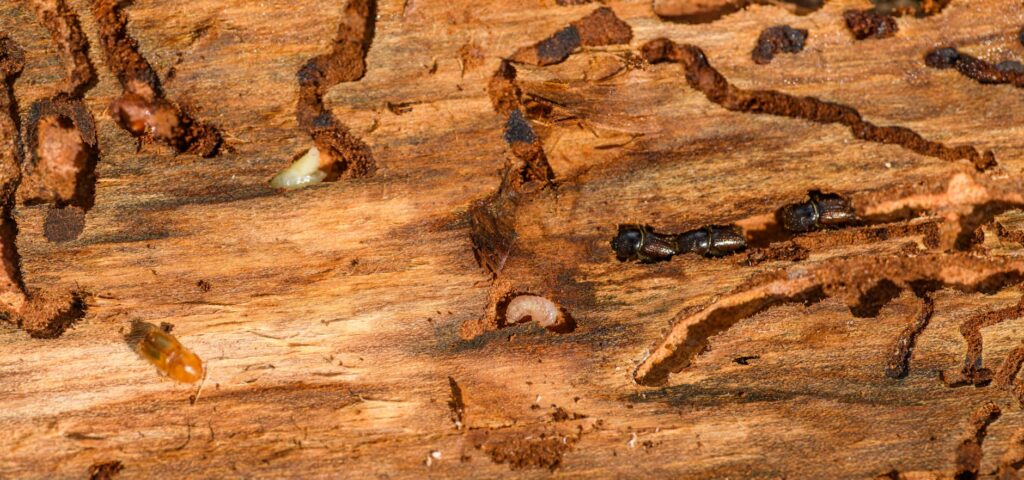
Subterranean termites feed along the grain of wood, attacking the softer springwood while leaving the harder summerwood intact. This creates a layered, channeled pattern inside damaged timbers. According to UC IPM, this distinctive pattern of wood damage can often be used to distinguish subterranean termite activity from that of other species.
Some species also deposit light-brown excrement within wood cavities. If you break open a damaged board and find this residue alongside the grain-following channels, that combination of signs points toward termite activity rather than water damage or other wood decay.
How to Spot Termite Activity Inside Your Missouri Home
Probing exposed timbers with a sharp instrument is Probing exposed timbers with a sharp instrument is a direct way to check for signs of termite damage indoors.. Wood that feels soft, sounds hollow when tapped, or appears channeled and unsound may reveal an active infestation. As the University of Tennessee Extension notes, a moisture meter can also help during an inspection, since termite-damaged areas often retain moisture differently than sound wood.
Look for irregular earthen tubes constructed across interior walls and floors. Mud tubes along baseboards or across exposed surfaces inside a basement or crawl space are strong signs of termite activity. Bubbling or uneven paint can also indicate a problem.
Where Termite Activity Shows Up Around Missouri Homes
Foundation walls are a primary area to inspect. Working tubes are constructed from the nest in the soil to wooden structures and may travel up concrete or stone foundations. These mud tubes can appear on both interior and exterior foundation surfaces, so checking both sides is important when looking for signs of termite presence.
Irregular earthen tubes may also appear along floors near the foundation. Wherever soil meets your home’s structure, termites can build these protected pathways to reach wood above ground level.
Exterior Entry Points Termites Use Around Missouri Homes
Outside your home, focus on the base of the foundation. Mud tubes running up concrete or stone are one of the clearest signs of termite activity. These tubes connect the nest in the soil to wooden parts of the structure, giving the colony a sheltered route between its food source and the ground.
Homes with a history of termite activity may benefit from inspections every six months. Catching these signs early gives you the information you need to decide on next steps.
Why Termite Problems Develop in Missouri Homes
Termite damage in Missouri homes rarely appears overnight. Understanding where these insects nest, what draws them in, and how they travel helps you spot warning signs before structural harm accumulates.
Outdoor Nesting Areas for Termites Around Missouri Homes
Subterranean termites live in the soil. According to Kansas State University Extension, colonies are typically located 1 to 30 feet below the surface and follow moisture gradients to find new food sources. Because these termites are soft-bodied and require moisture to survive, they build their nests where the soil stays consistently damp.
Food and Shelter That Attract Termites Around Missouri Homes
Any wood in contact with or close to soil can serve as a food source. Removing sources of moisture and repairing moisture damage around your home helps minimize termite access. A mature colony consumes only about one-fifth of an ounce of wood per day, but that steady feeding adds up over months and years.
Though drywood termites are uncommon in Missouri, they can arrive through imported wood products or furniture, creating additional food sources that attract activity.
How Termites Move Around Missouri Homes
Subterranean termites forage from their soil colonies into structures to access wood. As they consume it, they excavate galleries inside the wood, sometimes leaving only a thin wooden exterior. This makes damage difficult to notice from the outside until it has progressed.
Native subterranean termite species begin swarming in January and are mostly finished by early June. According to the University of Georgia termite guide, they swarm in the morning or early afternoon and are not attracted to lights. Swarmers are black to caramel colored and measure 1/4 to 3/8 inch in body length, so they can be easy to overlook.
Trails and Entry Points Termites Use in Missouri Homes
Because subterranean termites need continuous moisture, colonies typically follow a product or moisture gradient through the soil toward new food sources. Common signs of their travel include mud tubes along your foundation, which bridge the gap between soil and wood.
Although termites can become destructive over time, the structural damage happens slowly. If termites are suspected or found, take the time to identify the right treatment plan for the situation rather than rushing a decision.
Risks From Termite Damage in Missouri Homes
Termites feed on wood and other cellulose material, and they are common household pests. According to the University of Tennessee Extension, their presence may not be discovered until they swarm, sometimes years after infesting a structure. Understanding what these pests can do helps you recognize warning signs before the problem grows.
Structural Risks From Termite Damage in Missouri Homes
Subterranean termites invade and eat wood and other cellulose material, causing extensive damage in structural parts of a building. Workers are soft-bodied insects roughly 1/8 to 3/16 inch long, and they do the feeding that weakens wood from the inside out.
These pests build shelter tubes between soil and wood structures. As UC IPM notes, the earth-hardened tubes are made by workers using saliva mixed with soil and bits of wood or even drywall. If you spot mud tubes along your foundation, they may indicate an active pathway into your home.
Hidden Termite Damage in Missouri Homes
Because termites work from within wood, damage can remain hidden for a long time. Signs include mud tubes, soft or hollow-sounding wood, maze-like tunnels within wood, and small pellet-like droppings that resemble coarse sand.
Careful inspection is needed to detect and contain termite damage. This is especially important for drywood termites, which may infest furniture and picture frames, making them harder to spot without a close inspection of furniture and frames.
Belongings and Moisture Risks From Termite Damage in Missouri Homes
Beyond the structural parts of a building, termites can affect belongings made of wood and cellulose material. Any shelter tubes that subterranean termites have built between soil and wood should be destroyed to interrupt their access. Leaving these tubes intact allows workers to continue moving between the soil and your home undetected.
When a Termite Problem in Your Missouri Home Needs Action
Spring swarms are often the first visible clue of a nearby colony. In recent years, shifting temperatures have occasionally resulted in two swarm events within a single season.
Every home that does not have preventive termite treatment may eventually have termites. If you notice any of the signs listed above, a professional inspection can help determine the scope of the problem and what steps to take next.
Professional Pest Control for How To Identify Termite Damage in Missouri Homes
Spotting termite damage early matters, but knowing what to do next is just as important. Homeowners can correct conditions that invite an infestation and replace damaged wood on their own. However, the inspection and control steps that follow require professional involvement.
How to Reduce Attractants in Missouri Homes
Subterranean termites build working tubes from their nest in the soil to reach wooden structures. Correcting conditions that support an infestation, such as excess moisture and wood-to-soil contact, is something you can handle yourself.
The Holper’s preventive approach includes setting bait stations around your home or performing a liquid treatment that creates a treated barrier around the base of the residence. Bait stations are placed every 10 to 20 feet in the soil around the perimeter to intercept foraging termites before they reach the structure.
Why Termite Control in Missouri Homes Starts With Inspection
Finding live termites foraging within wood is a sure sign of an active infestation. Annual professional inspections help catch activity before damage escalates, and homes with prior termite history may warrant twice-yearly checks.
Routine inspections are valuable because shifting weather patterns can trigger swarms at unexpected times during the spring season.
What to Expect During Professional Termite Treatment in Missouri Homes
According to UC IfPM, applications of registered pesticides require a licensed pest control professional to carry out the inspection and control program. Control of subterranean termites in your structure is best left to professionals with the right training and tools.
Holper’s offers two primary treatment paths. The liquid soil treatment applies a professional-grade termiticide that binds to the soil around the foundation. The team trenches and treats the exterior foundation and, when accessible, drills and treats critical interior areas such as expansion joints, plumbing penetrations, and slab edges. The treatment creates a continuous treated zone that termites cannot detect or avoid.
What to Expect From a Termite Control Plan for Your Missouri Home
For structures where a baiting system is preferred, Holper’s installs monitoring and baiting stations around the perimeter. Once activity is detected, a growth-regulating bait is added. Termites carry the bait back to the colony. The system is monitored throughout the year to maintain continued protection.
Whether Holper’s recommends liquid treatment or a baiting system, the goal is long-term protection tailored to the structure. Every home without preventive treatment may eventually face termite activity.
Bottom Line on How To Identify Termite Damage in Missouri Homes
Spotting termite damage early starts with knowing what to look for: mud tubes along your foundation, hollow-sounding wood, discarded wings, and bubbling or uneven paint. Because termites can work behind walls and leave only a thin wooden exterior intact, regular inspections are the best way to catch activity before damage grows.
If you notice any of these signs, contact Holper’s Pest & Animal approaches for a thorough assessment of your home.
Frequently Asked Questions About how to identify termite damage in missouri
What Are the Most Common Signs of Termite Damage?
Bubbling or uneven paint on walls can also point to activity behind the surface.
How Often Should a Missouri Home Be Inspected for Termites?
An annual inspection is recommended for most homes. Those with a history of termite activity or previous damage may benefit from inspections every six months to stay ahead of new colonies.
When Are Termites Most Noticeable?
Shifting temperatures have occasionally produced two swarm events in a single season.
Can I Handle Termite Problems on My Own?
You can replace damaged wood and correct conditions that attract termites, such as structural deficiencies or excess moisture. However, treatment applications require a licensed pest control professional. Every home without preventive termite treatment may eventually face termite activity, so professional monitoring or treatment is worth considering.