 Skip to content
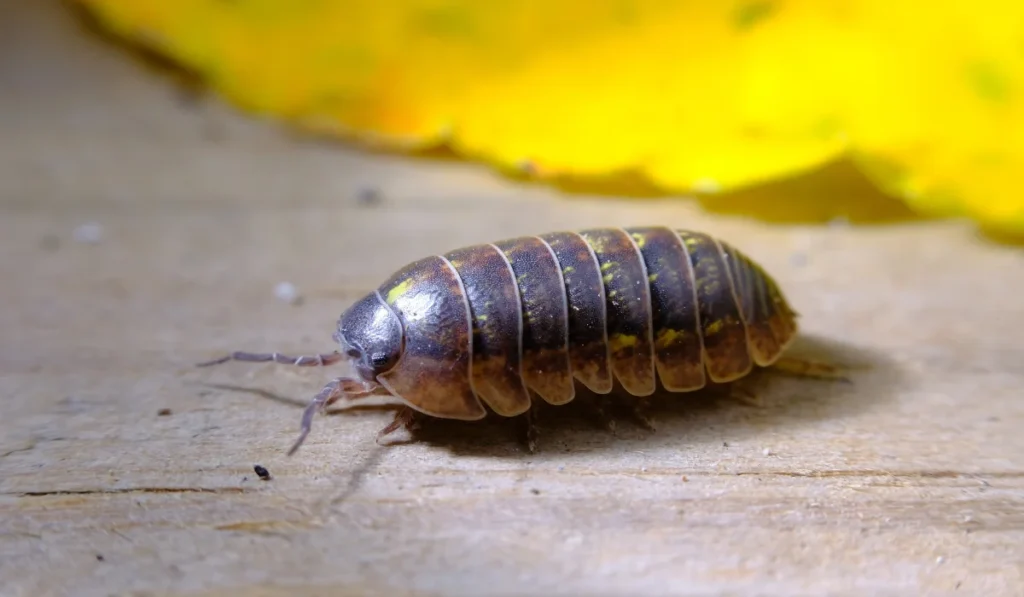
If you’ve seen a small gray bug curled into a ball on your basement floor, you’ve probably found a pill bug. In Columbia, MO, pillbugs indoors are common during rainy spring days and humid fall weather.
These bugs are also called roly-polies, rollie pollies, sowbugs, or woodlice. They do not bite or damage your home. But seeing them in large numbers can still be upsetting.
The good news is this: a pill bug infestation usually means you have a moisture problem, not a serious pest issue. When you fix the moisture, you fix the pill bug problem.
Let’s look at why pillbugs come inside and how to stop them.
Key Takeaways
- Pillbugs indoors are usually caused by moisture problems, not structural damage.
- Pill bugs, also called sowbugs or woodlice, need damp conditions to survive.
- Damp basements, crawl spaces, clogged gutters, and mulch against the foundation are common causes.
- Sealing entry points with caulk and lowering humidity can help prevent a pill bug infestation.
- If pillbugs keep appearing in large numbers, professional pest control can identify hidden moisture and entry issues.
Why Pillbugs (Roly-Polies) Wander Indoors
Pillbugs indoors are usually there by accident. A pill bug is not an insect. It is a crustacean, like a crayfish. The most common type found in Missouri is called Armadillidium vulgare.
Like other crustaceans, pill bugs need moisture to survive. Without it, they dry out quickly.
They Need Moisture
High moisture is the main reason pillbugs enter homes. After heavy rain in Columbia, the soil becomes soaked. Pillbugs leave wet areas and search for shelter.
They enter through small cracks at ground level. They may slip through gaps around doors, windows, or pipes. Once inside, they head to damp areas like basements and crawl spaces.
Damp basements are one of the most common places to find pillbugs indoors.
They Live Near Food Outdoors
Pill bugs are scavengers. They feed on decaying plant material. Outside, they eat mulch, leaf litter, grass clippings, and other organic matter.
If you have thick mulch around your home, it can create large populations of pill bugs. When the weather changes, those large populations may wander inside.
They are not looking to live in your house long term. They just follow moisture and food sources.
Weather Changes Push Them Inside
In Columbia, pillbugs indoors are most common in spring and fall. Rain, humidity, and cooler temperatures increase activity.
You may also see millipedes, centipedes, crickets, earwigs, or silverfish at the same time. These pests all like damp areas.
Seeing several types of bugs at once does not mean you have a major infestation. It usually means there is too much moisture around your home.
The Damp Spots That Draw Them Inside
If you are seeing pillbugs indoors, look for areas with high moisture. Fixing these spots helps prevent a pill bug infestation.
Damp Basements
Damp basements are a top problem area. Pillbugs gather along walls and near floor drains.
Older homes in Columbia often have unfinished basements. Without good airflow or dehumidifiers, moisture builds up. This creates the perfect space for woodlice and sowbugs.
Crawl Spaces
Crawl spaces can trap moisture. If there is exposed soil or a torn vapor barrier, humidity rises quickly.
Pillbugs build large populations under homes. From there, they can move up through small gaps and entry points.
Gutters and Downspouts
Clogged gutters cause water to spill near your foundation. Short downspouts keep water too close to the home.
Wet soil encourages decaying plant material and organic matter to build up. That attracts pill bugs.
Make sure gutters are clean. Extend downspouts to direct water away from the house.
Mulch and Landscaping
Mulch holds moisture. If it touches your siding, it becomes a hiding place for pill bugs.
Leaf litter and grass clippings also attract them. Overwatered young plants and potted plants near the home can increase activity.
Keep mulch a few inches away from the foundation. Clean up yard debris often.
How to Stop Pillbugs in the House
To get rid of pill bugs, focus on moisture and entry points. Spraying alone will not solve the root problem.
Seal Entry Points
Check your home at ground level. Look for cracks and gaps.
Use caulk to seal around windows, doors, and pipes. Closing entry points helps block pillbugs, sowbugs, and other pests like roaches and silverfish.
Lower Moisture Around the Home
Improve drainage around your foundation. Adjust sprinklers so they do not soak the siding.
Use dehumidifiers in basements and crawl spaces. Fix plumbing leaks right away.
When you reduce damp areas, pillbugs cannot survive indoors.
Clean Up Organic Matter
Rake leaf litter away from the house. Remove grass clippings and extra mulch.
Keep flowerpots and potted plants off the siding. This reduces hiding spots for pill bugs and other pests, such as crickets and millipedes.
Consider Professional Pest Control
If you are seeing pillbugs indoors in large numbers, it may be time to call pest control.
Holper’s Pest & Animal Solutions offers recurring general pest control services that cover pillbugs, millipedes, centipedes, crickets, earwigs, and more. Our technicians look for moisture issues and entry points, not just the bugs you see.
If you are also dealing with rodents in basements or crawl spaces, we can address both problems with a clear plan.
We focus on real solutions, not sales pressure.
Schedule a Moisture-and-Entry Inspection in Columbia
If pillbugs indoors keep showing up, it’s time to look at the moisture around your home. These pests survive because conditions allow them to. Fix the source, and the problem improves.
Holper’s Pest & Animal Solutions provides professional inspections and recurring pest control services in Columbia. Our technicians identify entry points and moisture issues so you get clear answers and practical solutions.
Contact us today to schedule your inspection and stop pillbugs at the source.
FAQs
Are pill bugs harmful to my home?
No. Pill bugs do not damage wood like termites. They do not spread disease like roaches. But large numbers indoors often mean you have a moisture issue that should be fixed.
Why am I seeing pillbugs and silverfish together?
Both pests like damp areas. If you see pillbugs and silverfish in basements or crawl spaces, the space likely has high moisture. Lowering humidity usually reduces both.
When should I call exterminators for pillbugs?
If pillbugs indoors keep coming back or you are seeing them in large numbers, professional pest control can help. An inspection can find hidden moisture problems and entry points.
