
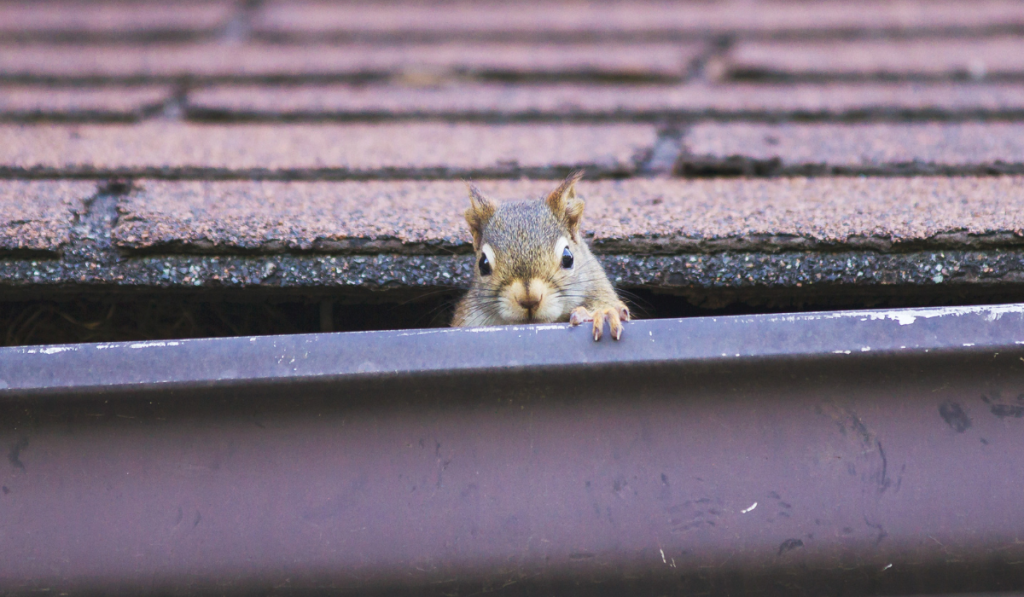
Scratching, running, or thumping above a ceiling can indicate that an animal is using the attic, but the sound does not reveal the species by itself. Squirrels, mice, rats, raccoons, bats, and even birds can produce noises that overlap.
The timing and weight of the movement provide useful clues. So do droppings, disturbed insulation, nesting material, gnaw marks, staining, and visible damage around the roofline. A complete inspection combines those details before any removal or repair begins.
Do not seal the first opening you find while activity is still present. The animal may remain inside, and dependent young may require special handling. The proper sequence depends on the species, the season, and how the animal is using the structure.
Why an Animal in Your Attic Gets More Active in Fall
Wildlife does not wait for the first freeze to look for shelter. As nights cool, animals spend more time around protected rooflines, chimneys, soffits, and vents. An opening that went unused in summer may become part of a regular fall travel route.
Attics offer dry cover and fewer disturbances than garages, porches, or sheds. Insulation can hold nesting material in place, while framing and storage boxes create hidden spaces. Once wildlife in the attic finds a dependable opening, it may use the same route every day.
Understanding how animals get into the attic starts with the roofline. Loose soffits, aging fascia, roof vents, plumbing openings, and places where two roof sections meet can all provide access. The Centers for Disease Control and Prevention recommends sealing openings larger than one-quarter inch when preventing rodents from entering buildings.
Small defects can also grow. Squirrels may chew along weak wood, while raccoons can pull at loose covers or damaged materials. That is why a roofline check should include all likely attic entry points, not only the area where the noise seems loudest.
What Different Noises in the Attic Can Tell You
Noises in the attic become more useful when you note the time, pace, and location. Fast movement at 8 a.m. suggests a different visitor than a heavy thump after midnight.
| What You Hear | When It Often Happens | Possible Animal | Likely Activity |
| Fast running, rolling, or scratching | Morning or late afternoon | Squirrel | Traveling, nesting, or chewing near an opening |
| Slow footsteps, dragging, or heavy thumps | Evening or overnight | Raccoon or opossum | Moving through insulation or using a den area |
| Fluttering, light squeaks, or movement near a vent | Around sunset | Bat | Leaving or returning to a roofline roost |
| Faint scratching or gnawing inside walls | Nighttime | Mouse or rat | Nesting or moving through wall voids |
Fast Movement During the Day
An animal in the attic during the day is often a squirrel. Squirrels can sound surprisingly loud when they cross ceiling joists or move nesting material. Repeated movement over the same area may point to a well-used path.
Nesting material provides another clue. Leaves, paper, fabric, and disturbed insulation may collect in a protected corner. Chewed wood around a vent or soffit can also indicate that squirrels in the attic have used the opening more than once.
Heavy Activity After Dark
An animal in the attic at night may be a raccoon, opossum, mouse, or rat. Raccoons create heavier, slower sounds than small rodents. A homeowner may hear dragging, shifting insulation, or a solid bump above the ceiling.
A female raccoon may use an attic as a den. If young are present, closing the opening can separate them from the mother. Raccoon removal should account for the time of year, the location of the den, and the animal’s travel route.
Opossums can produce similar heavy movement. Sound alone is not enough to separate them from raccoons, which is why physical signs matter during an attic inspection.
Fluttering Around Sunset
Bats in the attic often become noticeable near dusk. Light scratching, squeaking, or fluttering may come from a roof vent, chimney edge, or narrow gap near an upper wall. Watching the roofline from the ground around sunset can sometimes reveal an exit point.
Timing affects bat exclusion. The Missouri Department of Conservation recommends avoiding exclusions during May, June, and July because young bats may be unable to fly during part of the summer. A bat found in a bedroom or other occupied room requires separate guidance, especially when direct contact cannot be ruled out.
Light Scratching in Walls or Insulation
Mice in the attic tend to create faint scratching, rustling, or gnawing sounds. These scratching noises in the attic may travel into wall voids or spaces above cabinets and closets.
Rats can leave similar evidence, but their tracks, droppings, and movement are usually larger. Rodents do not have to remain inside all night. They may leave the structure for food or water, then return through the same exterior route.
That pattern makes rodent exclusion and exterior inspection just as important as checking the attic itself.
Signs of Animals in the Attic
The clearest signs of animals in the attic often appear in insulation, stored items, and roofline openings. These details help identify the species and show how long the space has been used.
| Sign in the Attic | What It Can Indicate | Why It Helps |
| Flattened or scattered insulation | Repeated movement | Shows where the animal travels or rests |
| Chewed wood or damaged vent material | Squirrel or rodent activity | Helps locate an active opening |
| Droppings concentrated in one area | A regular nesting or roosting site | Helps identify the animal and cleanup needs |
| Hair, staining, or rub marks near a gap | Frequent entry and exit | Points to the main access route |
| Leaves, paper, or shredded insulation | Nest building | May indicate that young animals are present |
Squirrels may carry leaves or insulation into a corner. Mice can nest inside boxes or beneath stored items. Raccoons often compress a broader section of insulation, while bats usually remain close to framing, vents, or roof joints.
Chewing deserves attention because it can affect more than one opening. Wood, vent screens, stored materials, and wire coverings may show tooth marks. Not every animal damages wiring, but exposed or gnawed material should be evaluated.
Droppings and nesting debris can also build up over time. The amount and location help determine whether spot cleanup is enough or whether a larger section of insulation needs attention. These signs of animals in the attic also help a technician decide whether wildlife removal and cleanup should happen in separate stages.
Why Sealing Attic Entry Points First Can Backfire
Closing a visible gap may feel like the fastest answer. It is often the wrong first step, as the animal may still be inside. Once its usual exit disappears, it may push farther into the structure or search for another route through a wall, ceiling, or vent. If young animals are present, sealing attic entry points can leave them behind.
The correct method depends on the species. The Missouri Department of Conservation provides guidance on nuisance wildlife and protected animals in Missouri. Trapping, exclusion timing, and handling requirements are not the same for every animal.
What a Professional Attic Inspection Should Accomplish
A useful attic inspection should answer three questions: what animal is present, where it is entering, and what must happen before repairs begin.
Reviewing the Activity
The process starts with what the homeowner has noticed. Time of day, sound location, outdoor sightings, and how long the activity has continued all help guide the inspection.
Those details do not replace physical evidence, but they can show where to start. Scratching noises in the attic near a soffit call for a different search than heavy movement beside a chimney after midnight.
Inspecting the Roofline and Attic
The exterior inspection may cover soffits, fascia, roof vents, eaves, chimney edges, plumbing openings, wire gaps, and roof intersections. Hair, staining, disturbed materials, or a widened opening can reveal the route.
An attic check may follow when the exterior does not tell the full story. Droppings, nests, tracks, compressed insulation, and damaged materials help confirm the species and show how much of the space is affected.
Building the Wildlife Removal Plan
The findings determine whether the next step involves trapping, monitoring, a one-way device, cleanup, or wildlife exclusion. Trap placement may be on the roof or ground rather than inside the attic, depending on the animal’s path.
Holper’s charges for wildlife inspections because the visit is diagnostic work, not a free sales appointment. A trained technician evaluates the structure, explains the evidence, provides photos when practical, and prepares a plan based on access, height, species, and repair needs.
Why Attic Animal Removal Alone Is Not Enough
Attic animal removal solves the immediate activity. It does not close the route that allowed the animal inside. Wildlife exclusion may include securing soffits, repairing fascia, screening vents, replacing damaged covers, sealing roofline gaps, or installing a chimney cap. The repair should match the animal and the condition of the structure.
A mouse-sized gap needs a different repair than an opening used by a raccoon. Bat work can involve several narrow roofline gaps rather than one obvious hole. Tree branches touching the roof may also give squirrels another path to the same area.
Professional wildlife removal works best when removal and exclusion are planned together. One clears the current problem. The other reduces the chance of the same route being used again.
Get Clear Answers About Wildlife in Your Attic
Wildlife in your attic may be nesting, caring for young, widening an opening, or making repeated trips between the house and outdoors. The noise is a warning that something is using the structure, but it does not explain the whole problem.
A complete solution follows a clear sequence. Identify the animal, complete attic animal removal with a method suited to the species and season, then repair the entry points after activity has stopped.
Holper’s Pest & Animal Solutions provides St. Louis wildlife removal with a technician-first, low-pressure approach. Schedule an inspection when scratching, fluttering, or heavy movement keeps returning overhead this fall. A trained technician can document the evidence, locate the entry route, and explain the practical next step.