 Skip to content
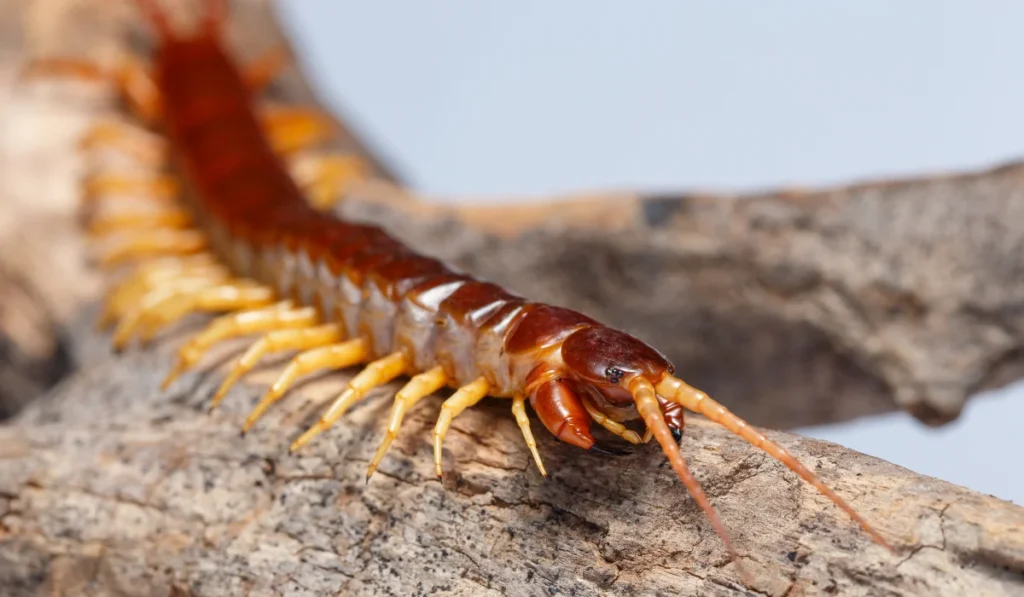
If you see a fast bug with many legs running across your floor, it is likely a house centipede. In Columbia, MO, house centipedes are common in homes, apartments, and commercial buildings.
They look scary, but they are not aggressive. House centipedes are arthropods. They have long legs, long antennae, and flat bodies. They move quickly along baseboards and into small crevices.
So what attracts centipedes?
Most of the time, the answer is simple: moisture, prey, and shelter. When these three things are present, centipede infestations can happen.
Key Takeaways
- House centipedes are attracted to moisture, prey, and shelter.
- Damp basements and crawl spaces are common hotspots.
- Silverfish, crickets, cockroaches, and other insects act as a food source.
- Sealing entry points and improving exclusion help prevent centipede infestations.
- Reducing excess moisture makes your home less inviting.
- Professional pest control can identify hidden moisture issues and long-term solutions.
What Attracts Centipedes: Moisture, Prey, Shelter
House centipedes do not show up without a reason. If you keep seeing them, something in your home is supporting them.
Moisture
Moisture is the biggest factor that attracts centipedes. House centipedes need damp areas to survive.
In Columbia, heavy rain and humid summers create excess moisture. Basements, crawl spaces, and even attics can hold damp air if there is poor airflow.
Leaky pipes under sinks add to the problem.
Clogged gutters can push water toward the home’s foundation. All of this increases dampness. When moisture builds up, centipede problems often follow.
Prey
House centipedes stay where they can find a food source. They hunt silverfish, crickets, earwigs, and cockroaches. They may also be near a termite issue if other insects are active.
If you already have a pest problem, centipedes may move in to feed. This is why their presence can point to a larger infestation hiding behind walls or under floors.
Centipedes are part of natural ecosystems outdoors.
But when insects move inside, they follow.
Shelter
Centipedes hide during the day. They look for dark hiding places.
Small cracks around the home’s foundation act as entry points. Gaps under doors and worn weatherstripping also allow them inside.
Once indoors, they hide along baseboards, inside crevices, and behind storage boxes. Without proper exclusion work, they can continue to return.
The Most Common Centipede Hotspots
Certain areas in Columbia homes are more likely to support house centipedes.
Basements
Basements are a common hotspot. They are cool, dark, and often damp.
Damp basements give centipedes hiding spots and moisture. If you see them along baseboards, there is likely a moisture issue nearby.
Crawl Spaces
Crawl spaces can trap excess moisture. Poor airflow and exposed soil increase dampness.
Insects gather there, which attracts centipedes. From crawl spaces, they can move through small cracks into living areas.
Bathrooms and Laundry Rooms
Bathrooms and laundry rooms often have leaky pipes or condensation. This creates damp areas.
Silverfish and crickets may live in these spaces. That gives centipedes a steady food source.
Around the Foundation
Outside the home, mulch, leaf litter, and leaf piles hold moisture. Millipedes and earwigs gather in these areas.
Clogged gutters can make the soil even wetter. Over time, this can attract centipedes indoors.
Simple Fixes That Make Your Home Less Inviting
You can reduce centipede infestations by removing the conditions they need.
Lower Indoor Humidity
Use dehumidifiers in basements and crawl spaces. Improve airflow where possible.
Fix leaky pipes quickly. Solve moisture issues before they turn into a bigger pest issue.
Seal Entry Points
Look for small cracks around the home’s foundation. Use caulk to seal gaps around pipes and windows.
Replace worn weatherstripping around doors. Strong exclusion reduces entry points for centipedes and millipedes.
Clean Up Outside
Keep mulch a few inches away from siding. Remove leaf litter and leaf piles near the structure.
Clean gutters so water drains away from the foundation. Dry soil makes it harder to attract centipedes.
Declutter
Declutter basements and storage areas. Centipedes hide in dark hiding spots.
Store items in plastic bins instead of cardboard boxes. This removes extra crevices.
Fix the Underlying Pest Issue
If house centipedes are feeding on silverfish, cockroaches, crickets, or other insects, those pests must be treated too.
Holper’s Pest & Animal Solutions offers recurring general pest control services in Columbia. When we reduce the food source, centipede infestations often decrease.
If you keep seeing house centipedes, it is time to address the root cause. A professional pest control inspection can identify moisture issues, entry points, and hidden insects. We serve Columbia with practical solutions and clear answers.
Contact us today to schedule your inspection and take the first step toward a pest-free home.
FAQs
Why am I seeing house centipedes in my home?
House centipedes usually appear because of excess moisture and other insects. Damp areas and available prey attract them.
Are house centipedes dangerous?
House centipedes are not aggressive. Bites are rare. Most concerns relate to moisture and other pest problems.
Do centipedes mean I have another infestation?
Often, yes. Because house centipedes feed on silverfish, crickets, and cockroaches, they can signal another pest issue.
How do I schedule pest control services?
Call our phone number or contact us today to schedule an inspection. A technician will check for moisture, entry points, and centipede problems.
