 Skip to content
Spotting a spider inside your home often leads to the same question: What kind of spider is this? For homeowners, tenants, and business owners across Missouri, that moment can quickly turn into concern. You might wonder whether it’s just a harmless house spider or one of the few spiders that deserve closer attention.
The good news is that most spiders found indoors are not considered dangerous. Still, Missouri homes regularly attract several species of spiders. Looking at a few simple clues can help narrow things down before deciding whether you need professional spider control.
If you’re trying to figure out what type of spider you’ve found, a few simple observations can make the process much easier.
Key Takeaways
- Most spiders found in Missouri homes are harmless and help capture prey like flies, mosquitoes, and other insects.
- Looking at clues such as body length, coloration, leg span, and web type can help narrow down the identification of spiders.
- Common Missouri spiders include wolf spiders, jumping spiders, grass spiders, cellar spiders, and the common house spider.
- If you suspect dangerous spiders, professional pest control can confirm the identification and address the problem.
Simple Clues to Narrow It Down
When homeowners attempt to identify spiders, a few basic observations can go a long way. Even without a background in entomology, these clues can help you narrow down which species of spiders you may be seeing.
Body Size, Body Length, and Leg Span
One of the most helpful clues is body length and leg span. Some spiders appear delicate and long-legged, while others look heavier and more solid.
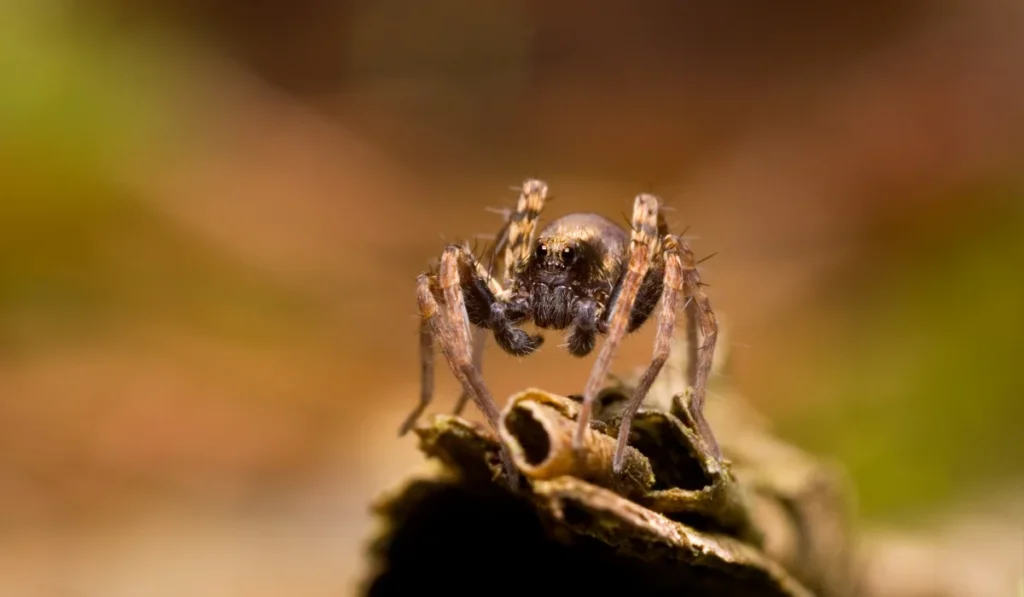
Wolf spiders, members of the Lycosidae family, tend to have a thick body and strong legs. They are active hunters that do not rely on webs to capture prey. Because of their size and hairy appearance, they are sometimes mistaken for small tarantulas, although tarantulas are uncommon around Missouri homes.
A house spider, including the American house spider or common house spider, usually has a much smaller body and thin legs. These spiders tend to stay hidden in corners where they build webs to catch insects.
Color and Markings
The coloration of a spider can provide useful hints as well. Many indoor spiders range from light brown to dark brown, often with faint patterns across the abdomen or cephalothorax.
The brown recluse spider is one of the better-known examples. Many people recognize it by the violin-shaped marking on its upper body. A typical brown recluse has a smooth body and a uniform brown color, unlike many other spiders.
The black widow spider is easier to recognize. This spider has a glossy black body and a distinctive red hourglass on the underside of its abdomen. Adult females are larger and more noticeable than males.
Webs, Egg Sacs, and Spiderlings
Webs provide another important clue. Some spiders rely on webs, while others spend their time roaming in search of prey.
The common house spider often builds irregular cobwebs in quiet areas of homes. Inside those webs, you may find round egg sacs, which eventually release dozens of tiny spiderlings.
Outdoor spiders, such as grass spiders or funnel-web spiders, create flat webs that lead into a funnel-shaped retreat. You may notice their long spinnerets extending from the back of the abdomen while they wait inside the funnel.
“Is It This One?” Common Spiders by Where You Found It
Location is often one of the easiest ways to narrow down a type of spider. Many species prefer certain environments inside or around structures.
Basements, Crawl Spaces, and Attics
Dark areas such as basements, crawl spaces, and attics commonly host cellar spiders, sometimes called daddy long-legs. Their bodies are small, but their legs are extremely long.
Some people use the same name for harvestmen, which are related arachnids but not true spiders. True cellar spiders hang upside down in loose webs and feed on small insects and other spiders.
These quiet areas can also attract the brown recluse spider, which prefers secluded spaces and may hide in crevices, storage boxes, or cardboard.
Garages, Sheds, and Storage Areas
Garages and sheds often attract wolf spiders, which wander in while hunting. Instead of building webs, they roam the ground in search of insects and sometimes hide in small burrows.
You may also see jumping spiders, including the species Phidippus audax from the Salticidae family. These spiders have excellent eyesight and move in quick, jerky jumps while stalking prey.
Another spider sometimes reported in storage areas is the hobo spider, which builds funnel-shaped webs along cracks and edges.
Gardens, Landscaping, and Eaves
Outside the home, you may notice larger spiders building circular webs between plants, railings, or along eaves. These are often orb-weaver spiders, members of the family Araneidae.
A familiar Missouri example is the garden spider, sometimes identified as Argiope. These spiders spin large, symmetrical webs and sit in the center waiting for flying insects.
Another group you might notice outdoors is crab spiders. Unlike web-builders, crab spiders hide on flowers and foliage. Their sideways pair of legs allows them to grab nearby insects.
Common Mix-Ups and Lookalikes
Many spiders are mistaken for each other because they share similar colors or shapes. Understanding these lookalikes can prevent unnecessary concern.
Wolf Spiders vs Tarantulas
Large wolf spiders often get mistaken for tarantulas because of their hairy appearance and larger bodies. In reality, tarantulas are rarely encountered around homes in Missouri.
Wolf spiders are common across North America and often wander indoors by accident. They rely on speed and eyesight rather than webs.
Cellar Spiders vs Daddy Long Legs
The term daddy long-legs can refer to two different animals. One is the true cellar spider, which spins webs inside homes.
The other is a harvestman, which belongs to a different group of arthropods and does not spin webs. Harvestmen have a single rounded body section, while spiders have two body segments.
Grass Spiders vs Yellow Sac Spiders
Grass spiders and the yellow sac spider sometimes get confused because both appear light in color.
Grass spiders build funnel webs in lawns and landscaping, while a yellow sac spider often wanders indoors at night. Because of their roaming behavior, yellow sac spiders sometimes get blamed for unexplained spider bites.
Want a Confident ID? Schedule a Spider Inspection
While these clues can help narrow down different spiders, identifying them correctly is not always easy. Many species share similar colors and body shapes, especially when viewed from a distance.
If you start seeing spiders regularly in your home, garage, or business, it may indicate a growing infestation or a strong insect population that is attracting them. Spiders tend to follow their food sources, which means controlling other pests is often part of the solution.
At Holper’s Pest & Animal Solutions, our technicians are trained to identify common Missouri spiders and determine whether they are harmless visitors or species that require attention. We focus on practical solutions that reduce spider activity and address the conditions that attract them.
If you’re unsure what kind of spider you’re seeing or you want help reducing spider activity around your property, contact us today. Our team can help you identify the spider and recommend the right expert spider control plan for your home or business.
FAQs
What spiders are most common in Missouri homes?
Missouri homes frequently see wolf spiders, jumping spiders, cellar spiders, grass spiders, and the common house spider. Most of these spiders are harmless and simply follow insect activity indoors. Professional residential pest control can help reduce the insects that attract them.
How can I tell if a spider is a brown recluse?
A brown recluse spider usually has a light-to-dark brown body with a violin-shaped marking on the cephalothorax. They prefer quiet, undisturbed areas such as basements, attics, and crawl spaces. Because several spiders look similar, accurate identification is important.
Should I worry about spider bites in my home?
Most spiders avoid people and rarely bite unless they feel threatened. In Missouri, the two spiders people worry about most are the brown recluse and black widow spiders. If spiders appear frequently in your home, a professional inspection can help determine the cause.
