
You move a stack of flower pots near the garage and notice a shiny black spider tucked under the rim. A few days later, you find another dark spider in a messy web near the firewood. In Chesterfield, that is enough to make many homeowners wonder whether they are seeing black widows.
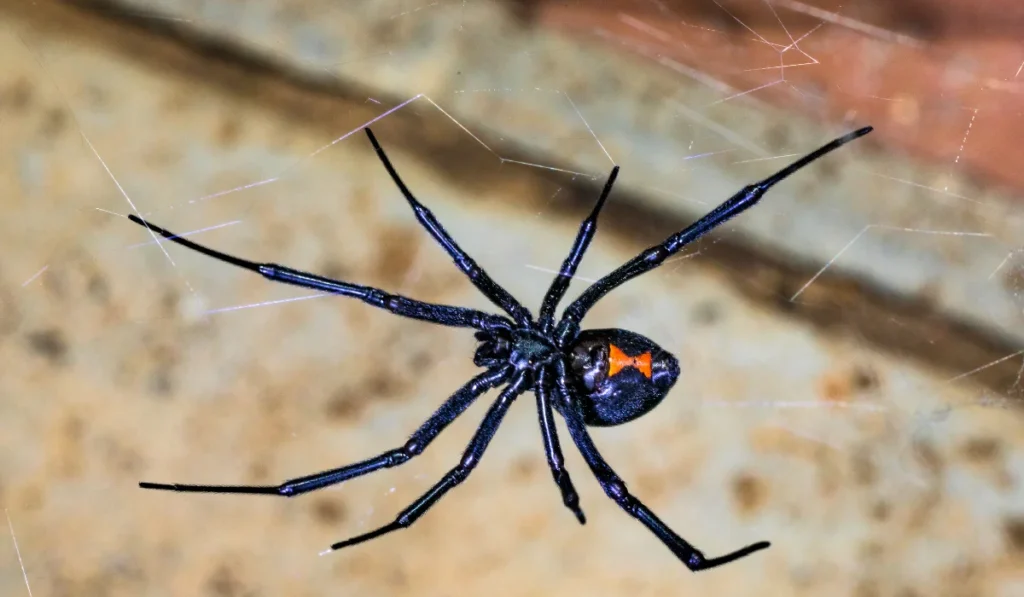
Color alone is not enough to confirm it. For black widow spider identification, look at the whole spider: a glossy black body, a rounded abdomen, and a red or orange hourglass marking on the underside. Adult females are the easiest to recognize, while males and immature black widows can look much different.
This guide explains how to identify a black widow, where they commonly hide around Missouri homes, which spiders can be mistaken for them, and when a professional inspection makes sense.
Key Takeaways
- Adult female black widows are glossy black with a rounded abdomen and a red or orange hourglass marking underneath.
- Males and immature black widows can look very different from the familiar adult female.
- Several spiders are commonly mistaken for black widows.
- Black widows are usually found in sheltered outdoor areas rather than out in the open.
- Accurate identification helps determine whether professional help is needed.
How to Identify a Black Widow Spider
The spider most homeowners picture when they think of a black widow is an adult female. She is the easiest member of the species to recognize because of her distinctive appearance. Looking at multiple characteristics together provides a more reliable identification than focusing on a single feature.
A dark-colored spider alone is not enough to confirm you’re looking at a black widow. Body shape, markings, and overall appearance all play a role in identifying the spider correctly.
The Red Hourglass Marking
The hourglass marking is the best-known black widow feature. On adult females, it appears on the underside of the abdomen and is often red or orange. The shape can vary, and in some black widows, it may look broken or less perfect. Do not try to flip the spider over or handle it to check the marking. If you can safely take a clear photo from a distance, that is a better option.
A Glossy Black Body and Rounded Abdomen
Adult female black widows have a smooth, glossy appearance that sets them apart from many other spiders found around homes. Their abdomens are rounded and bulb-like rather than narrow or elongated.
Many homeowners identify spiders based on color alone. The challenge is that several dark-colored spiders can appear black from a distance. Looking for both the glossy appearance and the rounded abdomen helps make identification more accurate.
Why Males and Young Black Widows Look Different
Not every black widow looks like the familiar adult female. Males are smaller and slimmer. Immature black widows may show lighter coloring, red or white markings, or patterns that fade as they mature.
The UC IPM spider guide notes that immature widow spiders may have visible markings that fade as they mature. When the spider does not match the classic adult female appearance, identification becomes harder.
Spiders Commonly Mistaken for Black Widows
Many homeowners only get a quick glimpse of a spider before it disappears into a corner, storage area, or web. That brief encounter can make identification difficult, especially when several spiders share similar characteristics. Knowing a few common lookalikes can help prevent unnecessary concern and improve identification accuracy.
Brown Widows
Brown widows belong to the same spider genus as black widows and share several physical characteristics. Their coloration ranges from tan to brown, and they may also display an hourglass marking.
Because younger black widows can look different from adults, distinguishing between the two species may require a closer look at color, markings, and body shape.
False Widows and Other Dark Spiders
Several dark-bodied spiders are commonly mistaken for black widows. At a glance, a dark spider tucked into a protected corner may appear similar, especially in low light.
Looking at the spider’s overall appearance rather than relying on color alone usually leads to a more accurate identification.
Where Black Widows Commonly Hide Around Chesterfield Homes
Black widows prefer sheltered areas where they can remain undisturbed. They typically avoid open spaces and spend much of their time hidden in protected locations. Knowing where they are most likely to hide can help you spot activity sooner.
Garages, Sheds, and Storage Areas
Garages and sheds can provide the quiet, cluttered conditions black widows prefer. Shelving units, stored equipment, boxes, outdoor toys, and unused containers can all create hiding places.
You may also find black widows around flower pots, stored landscaping supplies, outdoor furniture, utility corners, crawl space entrances, and cluttered garage shelving.
Woodpiles and Landscape Materials
Firewood, lumber, landscape timbers, and stacked materials can create protected gaps where spiders hide. These areas also attract insects, which can support spider activity. Keeping firewood and stored materials away from the foundation can reduce hiding places near the home.
Hidden Webs in Protected Spaces
Black widow webs usually look different from the large, symmetrical webs many people associate with spiders. Their webs are irregular and often tucked into corners, voids, or protected spaces. Many homeowners discover the spider before they notice the web.
What to Do If You Find a Black Widow
Finding a black widow does not automatically mean you have a widespread spider problem. The next step depends on where the spider was found and whether you’re seeing repeated activity around the property. The goal is to understand whether you’re dealing with a single sighting or a larger issue.
Take a Photo From a Safe Distance
If you can do so safely, take a clear photo of the spider. A photo often provides more useful information than a verbal description and may help with identification later. Avoid handling spiders directly or reaching into spaces where visibility is limited.
Watch for Repeated Activity
Finding one spider behind a flower pot is different from repeatedly finding spiders around sheds, garages, storage areas, or woodpiles. Repeated sightings may indicate that conditions around the property are supporting ongoing spider activity.
When a Professional Inspection Makes Sense
If you’re unsure whether the spider is a black widow or if you’re finding spiders in multiple areas around the property, a professional inspection may provide clearer answers.
At Holper’s Pest & Animal Solutions, inspections are performed by trained technicians rather than salespeople. The focus is on identifying the species present, evaluating conditions that may be contributing to activity, and recommending practical solutions based on the findings.
This inspection-first approach reflects the company’s commitment to solving problems rather than making unnecessary recommendations.
Professional Pest Control for Black Widow Spiders
Finding a black widow around your property does not automatically mean extensive treatment is necessary. The first step is confirming the species and understanding whether you’re dealing with an isolated sighting or ongoing activity.
Professional pest control begins with identifying what you’re actually seeing. Many dark-colored spiders are mistaken for black widows, which is why inspections often provide valuable information before any recommendations are made.
Why Correct Identification Matters
Not every dark-colored spider requires the same response. Accurate identification helps determine whether you’re dealing with a black widow, a lookalike species, or another spider entirely.
Starting with identification allows recommendations to focus on the actual issue rather than assumptions. This approach helps avoid unnecessary treatments and supports more effective long-term results.
What an Inspection Can Tell You
A professional inspection can help identify the spider species present, locate areas where activity is occurring, and identify conditions that may be supporting spiders around the property.
Garages, sheds, storage areas, woodpiles, and other sheltered locations are often inspected when homeowners report black widow sightings. Understanding where spiders are hiding often provides valuable clues about the overall situation.
Black Widow Spider Identification: Bottom Line
The easiest way to identify an adult female black widow is by looking for three characteristics together: a glossy black body, a rounded abdomen, and a red or orange hourglass marking underneath. Looking at the entire spider rather than a single feature provides the most reliable identification.
If you’re finding spiders around garages, sheds, woodpiles, storage areas, or other sheltered locations and aren’t sure what you’re seeing, a professional inspection can help provide answers.
Holper’s Pest & Animal Solutions serves Chesterfield homeowners with technician-led inspections designed to identify the issue and recommend practical next steps based on the situation.
Frequently Asked Questions
What is the easiest way to identify a black widow?
The easiest way to identify an adult female black widow is by looking for a shiny black body, a rounded abdomen, and a red or orange hourglass marking on the underside.
Are all black spiders black widows?
No. Many spiders are dark in color. Accurate identification requires looking at body shape, markings, and overall appearance rather than relying on color alone.
Where are black widows usually found around homes?
Black widows are commonly found in garages, sheds, woodpiles, storage areas, outdoor furniture, and other protected locations that receive little disturbance.
Should I try to remove a black widow myself?
Avoid handling spiders directly. If you’re unsure about identification or you’re finding repeated activity around the property, a professional inspection can help determine the most appropriate next step.
Do black widows live inside homes?
They are more commonly found in sheltered outdoor areas, garages, crawl spaces, sheds, and storage locations, though they may occasionally be encountered indoors if suitable hiding places are available.