
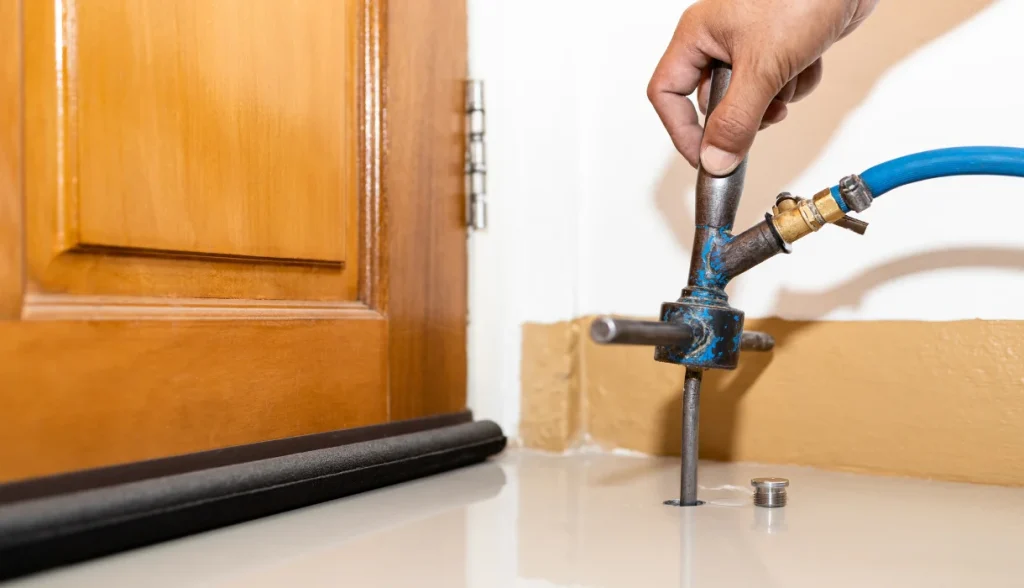
If you’re building a house, termites may feel like a problem for much later. The framing is new, the foundation has just been poured, and there is no previous termite damage to deal with. The soil around that house is another story, which is why pre-construction termite treatment deserves attention before the build is finished.
A pre-construction termite treatment gives a termite professional access to areas that become harder to reach once floors, walls, patios, and landscaping are in place. Depending on the construction and treatment plan, that may include soil beside the foundation, slab edges, plumbing penetrations, and expansion joints.
This is especially relevant for termite prevention for new homes in Missouri. Subterranean termites are the main termite type encountered in the region, and they forage through soil around structures. New lumber doesn’t remove that exposure. The right answer isn’t that every house needs an identical termite pretreatment. Homeowners should find out what protection the builder has planned, what was actually installed, and how that system should be maintained after closing.
What Is a Pre-Construction Termite Treatment?
A pre-construction termite treatment is termite protection performed during selected stages of a new build. The work is coordinated with construction so certain soil and foundation areas can be reached before concrete, finished surfaces, or other building materials block access.
That timing separates termite treatment before construction is finished from work on an existing house. A technician at a completed property may have to work around patios, flooring, finished basements, porches, or landscaping. During construction, many of those same areas are still exposed.
Where Termite Pretreatment May Be Applied
The exact treatment pattern depends on the foundation design and the system being used. A slab foundation, crawl space, or basement may each call for a different approach.
| Construction Area | Why It Matters |
| Soil beside the foundation | Subterranean termites forage through soil around structures |
| Slab edges | These are transition points between concrete and surrounding construction |
| Plumbing penetrations | Pipes and utility lines create openings through slab and foundation areas |
| Expansion joints | Joints interrupt otherwise continuous concrete surfaces |
| Accessible interior foundation areas | Some designs create additional places where soil and structural materials meet |
A good termite pretreatment isn’t about applying material everywhere. It focuses on the areas that matter for the particular structure and follows the requirements of the termite-control system being installed.
Why New Homes Can Still Face Termite Problems
New construction doesn’t start on new soil. Subterranean termites live in colonies associated with the ground and forage for cellulose-based material. If termites are active around a building site, the age of the framing doesn’t prevent them from approaching the structure.
The U.S. Environmental Protection Agency reports that termites cause billions of dollars in structural damage each year and that property owners spend more than $2 billion annually treating them. Those are national figures, but they show why termite prevention is often considered during construction rather than only after damage appears.
Construction also creates connections between the soil and the finished building. Plumbing lines cross concrete. Slabs meet foundation walls. Soil is graded around the house. Later, mulch, irrigation, decks, and patios can change what is visible around the foundation.
What Can Increase Termite Exposure Around a New Home?
| Condition | Why It Deserves Attention |
| Soil placed high against the foundation | Can conceal areas that would otherwise be visible during a termite inspection |
| Wood or construction debris near soil | Provides cellulose material close to the structure |
| Recurring moisture near the house | Can create conditions favorable to subterranean termite activity |
| Concealed slab or foundation joints | May make early termite activity harder to notice |
| New landscaping or excavation | Can disturb soil around previously treated areas |
| Poor drainage | Keeps foundation areas damp longer than intended |
None of these conditions guarantees a termite infestation. They simply show why new home termite protection involves both the treatment itself and what happens around the house afterward.
How New Construction Termite Treatment Works
A new construction termite treatment can use different methods depending on the structure, building schedule, and protection plan. Soil-based treatments are common because subterranean termites approach structures through the ground, while baiting systems can play a role in longer-term monitoring and control.
The treatment method should fit the property rather than being selected because one option sounds more comprehensive. A homeowner who knows what happened during construction can make much better decisions later.
Soil Treatment for Termites
A soil treatment for termites focuses on selected soil areas around the foundation. During construction, these areas may still be exposed, which allows the work to be completed before concrete or finished building features restrict access.
A liquid termite treatment is designed to create a treated zone in the soil where termites would otherwise travel toward the structure. Depending on the construction, attention may be given to foundation perimeters, slab edges, plumbing penetrations, and other relevant transition points.
Once construction is complete, a similar termite soil treatment may require trenching beside the foundation or gaining access to areas that were much easier to reach during the build. That difference in access is one of the strongest arguments for planning termite protection early.
Termite Baiting Systems
A termite baiting system takes a different approach. Bait stations are placed in soil around the structure so foraging termites can encounter them. The system then relies on inspection, monitoring, and servicing over time.
Homeowners comparing termite treatment for new construction should understand that these systems work in different ways rather than treating them as interchangeable products.
| Protection Method | Main Role | Typical Timing |
| Pre-construction soil treatment | Addresses accessible soil and foundation areas | During construction |
| Post-construction liquid treatment | Treats selected soil around an existing house | After construction |
| Termite baiting system | Monitors and manages foraging termite activity | Near completion or after construction |
| Termite inspection | Checks for activity, damage, and conditions around the property | Throughout homeownership |
A termite barrier or treated soil zone also shouldn’t be viewed as permanent protection that can be ignored. Future excavation, structural changes, and site conditions may affect how the original treatment performs.
When Does a Pre-Construction Termite Treatment Make Sense?
A pre-construction termite treatment makes the most sense when it’s planned alongside the foundation work rather than added as an afterthought. It’s especially worth discussing in areas with established subterranean termite pressure and on projects where soil and slab areas will become difficult to access once construction is complete.
That doesn’t mean the same treatment is required on every home. Building codes, construction methods, financing requirements, local rules, and builder specifications can differ. Avoid assuming that all new homes automatically receive termite treatment or that a builder is legally required to use one specific system.
Is Termite Treatment Necessary for New Construction?
From a homeowner’s perspective, the useful question is what protection your house received. Before closing, ask for documentation rather than relying on a general statement that termite treatment was included.
The treatment record should tell you enough to understand the method, the timing, and any ongoing obligations. It can also help a termite professional years later if you need an inspection or want to change protection systems.
| Question to Ask the Builder | What You Need to Know |
| What termite protection was used? | The specific treatment or system installed |
| When was it completed? | Where the work occurred in the construction schedule |
| Who performed the work? | Who may have application and warranty records |
| Is there written documentation? | Proof of the home’s termite treatment history |
| Is there a warranty or renewal requirement? | What you must do after closing to maintain coverage |
| Will landscaping or future construction affect it? | Whether later work near the foundation may need review |
If the builder can’t immediately produce those records, that doesn’t prove the house was never treated. It does mean you should get a clearer answer before assuming the termite-prevention plan is complete.
What Should Happen After Construction?
Termite prevention for new homes doesn’t stop when the keys change hands. Once you move in, the condition of the foundation perimeter becomes part of routine home maintenance. Landscaping grows, irrigation systems change, drainage patterns shift, and owners add decks, planting beds, walkways, or patios.
Keep enough of the foundation visible for a termite inspection. Soil or mulch piled high against the structure can hide mud tubes and other signs that would otherwise be easier to spot. Firewood, scrap lumber, cardboard, and similar cellulose materials also shouldn’t remain against the house or in long-term soil contact beside the foundation.
Watch for Changes Around Treated Soil
Excavation deserves attention if the home received a soil treatment for termites. Utility repairs, drainage projects, additions, planting beds, or patio construction can disturb treated soil around the foundation. After significant work, it’s reasonable to ask whether the affected area should be reviewed.
Moisture issues should be corrected rather than ignored because the property has termite protection. Poor grading, leaking outdoor fixtures, irrigation directed toward the house, and recurring damp areas can make inspection and long-term termite control more difficult.
An annual or otherwise regularly scheduled termite inspection can also help homeowners keep track of conditions around the structure. The appropriate schedule depends on the home’s treatment history, warranty requirements, previous termite activity, and the system being maintained.
Making the Right Termite Protection Choice for a New Missouri Home
A new home gives you a chance to understand termite protection from day one. Find out whether the builder used a pre-construction termite treatment, keep the treatment records, and learn whether the system requires inspections, monitoring, renewal, or other maintenance. Those details are more useful than assuming a newly built house is already covered.
For Missouri homeowners, the main concern is subterranean termites moving through soil around the structure. Planning termite prevention while foundation areas are accessible can make sense, but the right approach depends on the house, what was done during construction, and any changes made around the property after the build.
If you’re building or buying and want another set of trained eyes on the property, Holper’s Pest & Animal Solutions can review your termite protection and explain the available options. Holper’s sends a trained technician, so the recommendation is based on the structure, its treatment history, and the conditions around the home. That’s useful when you want a clear answer about termite protection.